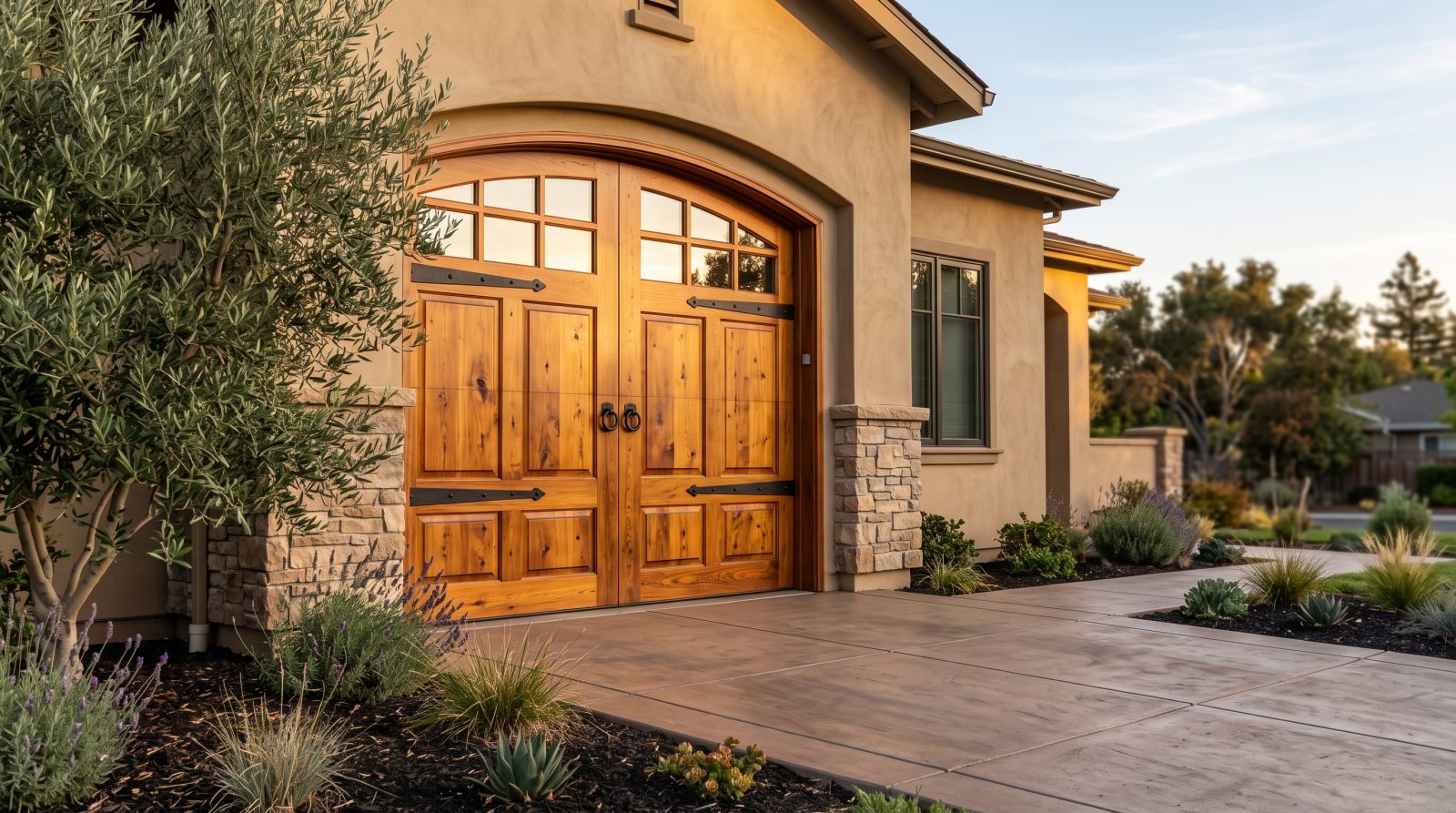
Why Sacramento Homeowners Still Choose Real Wood
Wood is the original garage door material, and it remains the standard that every faux-wood and composite product is measured against. The reason is simple: real grain, real shadow lines, and real depth. Light moves across a stained cedar or hemlock panel differently through the day, and that living quality is exactly what people love about it. For homes in character-rich neighborhoods like Curtis Park, the Fab 40s, or downtown's older grids, a wood door often reads as the most architecturally honest choice.
There is also real design freedom. Wood can be built as classic raised-panel, clean modern flush, carriage-house style with decorative hardware, or full custom millwork to match an existing front door or fence line. Species like cedar and redwood bring natural warmth and a degree of inherent weather resistance, while paint-grade options give you a crisp, color-matched look. Because wood is workable, it is frequently the right answer when a door needs to fit an unusual opening or echo a specific historic style.
Curb appeal is not just aesthetic pride in this market. In the Sacramento area, the garage door is often the single largest design element facing the street, and a well-kept wood door signals a cared-for home. That matters whether you are simply enjoying the house or thinking ahead to resale.
- Authentic grain and depth that faux-wood finishes approximate but never fully match
- Wide style range: raised-panel, flush modern, carriage-house, and full custom millwork
- Naturally insulating compared to a thin single-layer steel door
- Can be refinished and restained over its lifetime instead of replaced outright
- Strong curb-appeal payoff on character homes across central Sacramento
The Honest Trade-Off: Wood Is Beautiful, but It Asks for Care
The same natural quality that makes wood gorgeous also makes it the most maintenance-aware material you can put on a garage. Wood breathes. It takes on and releases moisture with the weather, which means it expands, contracts, and very gradually moves over the years. A finish is not decoration on a wood door; it is the protective skin that keeps water and UV out of the grain. When that skin thins or cracks, the wood underneath becomes vulnerable.
Sacramento's climate puts a specific kind of stress on that finish. Our summers are long, dry, and punishingly bright, and direct afternoon sun on a south- or west-facing door is the single biggest enemy of a stain or paint job. UV breaks finishes down, fades color, and can leave the surface chalky or gray well before the wood itself fails. Then winter arrives with cold mornings, tule fog, and weeks of damp, so the door cycles from bone-dry to moist and back again. That repeated swing is what eventually opens seams and lifts finish if the door has not been kept up.
None of this should scare anyone off wood. It simply means a wood door rewards a little planned attention. Owners who refinish on a sensible schedule and address small issues early tend to get many good-looking years out of a door. Owners who let a failing finish go for too long are the ones who end up facing warped panels, delamination, or rot that is far more expensive to deal with.
- Finish is protection, not just looks; once it fails, the wood is exposed
- Intense valley UV is the top cause of faded, chalky, or peeling finishes here
- Dry-summer to damp-winter swings drive seasonal expansion and contraction
- South- and west-facing doors weather noticeably faster than shaded ones
- Small problems caught early are routine; ignored ones become structural
A Realistic Sacramento Maintenance Rhythm
The good news is that wood-door upkeep is predictable. Most of it is light and seasonal, and the heavier refinishing work comes around on a schedule you can plan for. Think of it in three layers: simple cleaning a couple of times a year, a finish check each season, and a full refinish when the protective coat has run its course.
For routine care, a gentle wash with mild soap and water clears off dust, pollen, and the gritty film that valley air leaves behind. Spring is a smart time because it knocks off winter grime before the harsh summer sun bakes it on. While you are there, look closely at the lower third of each panel and the bottom edge, where water and sun do the most damage, and run a hand over the surface to feel for rough or chalky spots that signal the finish is wearing thin.
Refinishing intervals depend heavily on exposure. A shaded, north-facing door can go a good while between coats, while a fully sun-blasted south or west elevation may need attention considerably sooner. Rather than guessing by the calendar alone, watch the finish itself: fading color, a dull chalky feel, water that stops beading and starts soaking in, or any hairline checking in the grain are all the door telling you it is time. Catching it at the fade stage means a cleaning and a fresh coat; waiting until it peels means stripping and far more labor.
- Wash gently twice a year to remove dust, pollen, and valley grit
- Inspect each season, paying closest attention to bottom edges and lower panels
- Watch for fading, chalkiness, and water soaking in instead of beading
- Refinish on exposure, not just age; sunny elevations need it sooner
- Re-coat at the fade stage to avoid a full strip-and-refinish later
Where Wood Doors Actually Fail, and How to Get Ahead of It
When a wood garage door develops problems, the issues tend to cluster in a few predictable places, and knowing them lets you intervene early. The bottom rail and bottom edge are the most common trouble spots, because that is where water wicks up from a wet driveway, splashes during rain, and lingers in winter damp. A failing bottom seal or a worn finish down low is the classic starting point for swelling and eventual rot.
Joints and seams are the next concern. As panels move with the seasons, caulk and finish at the joints can crack, opening a path for moisture into the end grain. Hardware adds its own wear: a real wood door is heavier than steel, so hinges, rollers, and the spring system work harder, and decorative carriage hardware can loosen or corrode if it is not kept up. Finally, a heavy door that has shifted or swollen can start to bind in the tracks or throw off the balance the opener depends on, which is where a cosmetic issue quietly turns into an operational one.
Getting ahead of all this is mostly about attention and timing. Keep the bottom seal intact, keep the finish sound, re-caulk seams before they gap, and have the moving parts checked so the extra weight of wood does not quietly wear out the hardware. When something is past simple upkeep, a damaged section can often be repaired, refinished, or rebalanced rather than the whole door being scrapped, especially on a quality custom build worth preserving.
- Bottom edge and bottom seal: first place water damage and rot show up
- Joints and seams: re-caulk before seasonal movement opens them
- Hardware: heavier wood doors put more load on hinges, rollers, and springs
- Binding or balance changes: swelling and shifting can stress the opener
- Many wood-door problems are repairable, not automatic full replacements
How Our Mobile Sacramento Team Helps with Wood Doors
We are a mobile, we-come-to-you operation serving the Sacramento area, which fits wood doors especially well. A real wood door is heavy, awkward, and tied into your home's springs, tracks, and opener, so the practical place to service it is on the home where it hangs, not somewhere you have to transport it. We bring the work to your driveway across the region, from the central grid and East Sacramento out to Elk Grove, Folsom, Roseville, Rocklin, Citrus Heights, and the surrounding communities.
For wood doors specifically, that means hands-on help with the things that actually keep them alive: assessing a worn finish and the condition of the wood, replacing a failing bottom seal, addressing swelling, binding, or balance issues, re-securing or replacing tired hardware, and tuning the spring and opener system that a heavier door leans on. When a door has a damaged section or a problem that has gone past routine upkeep, we will tell you honestly whether it is a repair, a refinish-and-rehang, or genuinely time to talk about a new door, rather than defaulting to the most expensive answer.
If you are weighing whether your current wood door is worth saving, or you simply want it looking and operating its best again, the easiest first step is to have it looked at in person. Costs for wood-door work vary widely with the door's size, species, condition, and how far the finish has gone, so we keep things transparent: we assess the real situation at your home and give you clear options. To get started, call or request a free quote and we will come to you.
- Fully mobile across the Sacramento area; we service the door where it hangs
- Help with finish assessment, bottom seals, swelling, binding, and balance
- Hardware, spring, and opener service tuned to a heavier wood door
- Honest repair-versus-refinish-versus-replace guidance, not upselling
- Same-day local help available; call or request a free quote