What "Off Track" Actually Means
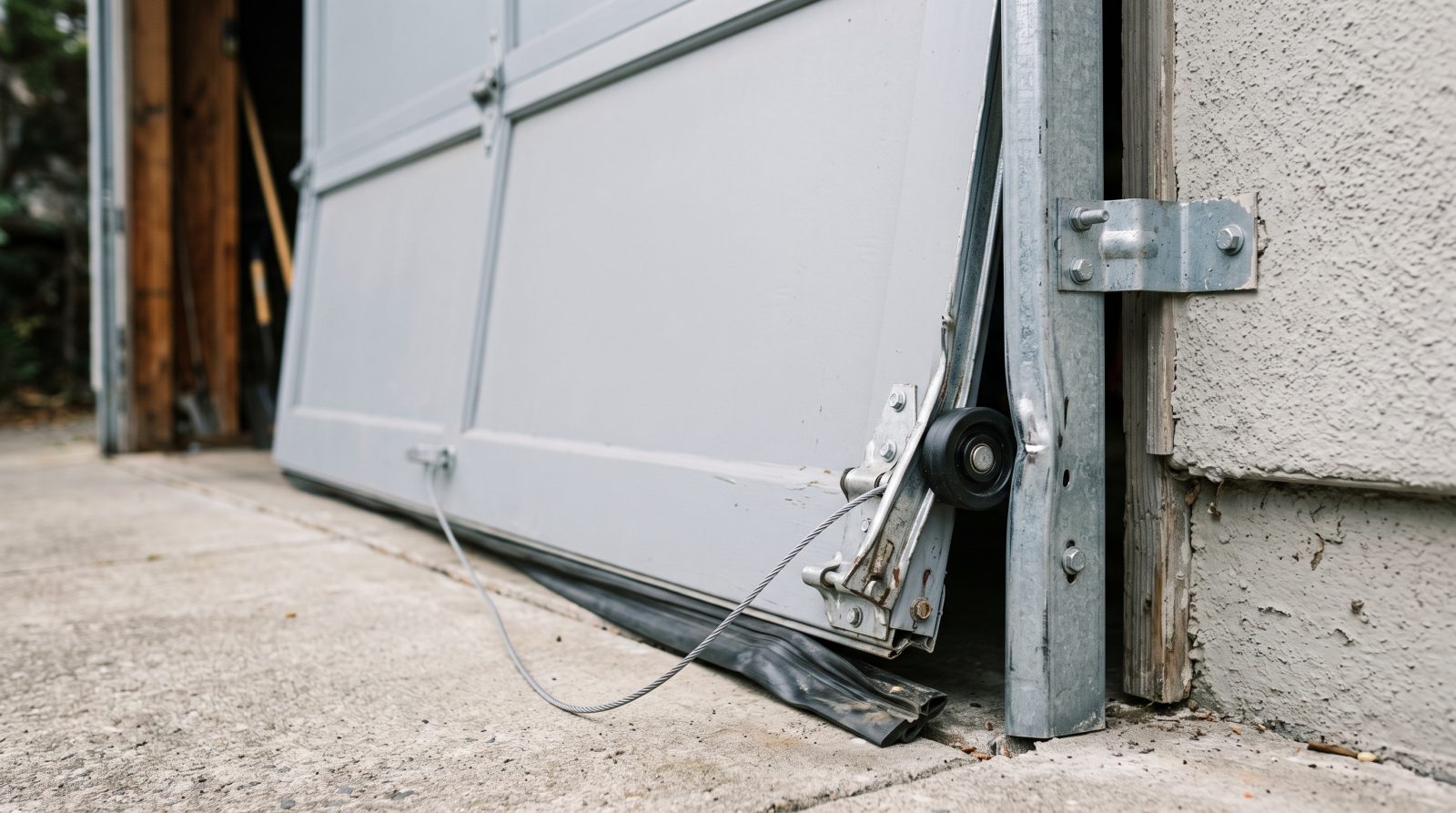
Your garage door rides on two vertical tracks bolted to the framing on each side of the opening, which curve back into horizontal tracks along the ceiling. Small wheels called rollers sit in those tracks, and the door is balanced by a spring system overhead so it moves smoothly with very little effort. When the door is "off track," it means one or more rollers have left the channel they are supposed to ride in. The door can no longer travel straight, so it binds, tilts, sags on one side, or jams partway open.
An off-track door tends to show up in a few recognizable ways. Sometimes a single roller pops out near the top while the rest of the door still moves, leaving the door slightly cockeyed. In worse cases, an entire side comes out of the vertical track and the door leans into the garage or hangs out over the driveway. You may hear a loud bang or grinding the moment it happens, find the door stuck at an angle, or notice the rollers visibly sitting outside the metal channel. Any of these means the door has lost its guided path and should be treated as out of service until it is properly reset.
- A roller or rollers have left the metal track channel
- The door tilts, sags, or jams instead of moving straight up and down
- You may see a gap between the roller and the track, or a bent track section
- A loud bang, grinding, or a door stuck at an angle are classic signs
- The opener may strain, reverse, or stop because the door no longer moves freely
Common Causes We See Across Sacramento
Doors rarely jump the track for no reason, and finding the true cause matters as much as putting the door back. The single most frequent trigger we see in Sacramento garages is a door being bumped or backed into. A car nudging the bottom section, a bike or trash bin leaning against a panel, or a kid swinging on the door can knock a roller loose, especially on doors that are already worn. Because so many homes here have the garage as the main entry off the driveway, the door takes a lot of daily traffic.
Wear and environment do the rest. Older rollers with worn plastic or seized bearings stop rolling smoothly and start to drag, which gradually walks them out of the track. Sacramento's hot, dry summers bake the lubricant out of hinges and rollers, while winter damp and the occasional Delta-driven storm can rust hardware and swell wood doors so they bind. Loose lag bolts, bent track from a prior minor impact, a broken roller, or a snapped lift cable that lets one side drop can all end the same way, with the door off its tracks. We diagnose the root cause before we re-seat anything, because re-railing a door without fixing what knocked it off just guarantees a repeat call.
- Impact from a vehicle, bike, trash bin, or object leaning on the door
- Worn, cracked, or seized rollers that drag instead of roll
- Dried-out hardware from hot, dry summers and lost lubrication
- Rusted or swollen components after damp, stormy stretches
- Loose lag bolts or framing that let the track shift out of alignment
- A broken lift cable or spring that drops one side of the door
Why You Should Never Force an Off-Track Door
When a door is hanging crooked, the natural instinct is to grab it, shove it back, or hit the opener button and hope it corrects itself. Please do not. A garage door is the largest and heaviest moving object in most homes, and an off-track door is no longer balanced or controlled the way it was designed to be. Forcing it, by hand or with the opener, is how a manageable repair turns into a dangerous one.
Running the opener on a derailed door can drag the door deeper out of alignment, bend the track, twist panels, and burn out the opener motor or strip its gears against the resistance. Worse, the door is held up by springs and cables under extreme tension. If you yank on a stuck door, or if a cable is already involved in the failure, you can release that stored energy suddenly. That is how people get hands crushed, fingers pinched in pinch points, or struck by hardware that lets go. There is also a real risk of the door coming the rest of the way out of the track and falling. The safe move is simple: stop using the opener, keep people and cars clear of the doorway, do not park under or behind it, and call for a mobile tech. A controlled, professional reset is far cheaper than replacing bent tracks, mangled panels, and a wrecked opener, and far safer for you.
- The opener can bend tracks, twist panels, and burn out its motor
- Springs and cables under high tension can release with serious force
- Pinch points and a falling door create real injury risk
- One forced cycle can turn a simple reset into a full section or hardware replacement
- Stop using the opener, keep the area clear, and let a tech reset it safely
How Our Mobile Off-Track Repair Works
Because we are a mobile garage door service, there is nothing to load up and haul anywhere, we bring the shop to your driveway. When you call, we get the door's general condition and your location so we can roll out to you, and we offer same-day service for off-track situations whenever our schedule allows, since a derailed door often leaves a home unsecured or a car trapped inside. We cover homes throughout the Sacramento area, so wherever you are in the region, we can come to you.
On site, the first thing our technician does is make the door safe, securing it so it cannot drop or shift while we work, and relieving pressure where needed. Then we inspect the whole system, not just the popped roller: tracks for bends, rollers for wear, hinges, lag bolts, cables, and the spring balance. We re-seat the door into the track, replace any rollers or hardware that caused or were damaged in the failure, straighten or replace bent track sections as needed, re-align the tracks so the door runs true, and re-balance the door. Before we leave, we cycle the door several times by hand and with the opener to confirm it travels smoothly, seals at the bottom, and reverses correctly on the safety sensors. You get a door that works the way it should, plus a clear explanation of what failed and how to keep it from happening again.
- Fully mobile, we come to you anywhere in the Sacramento area
- Same-day service for off-track doors when scheduling allows
- Door secured first, then a full-system inspection, not just the visible problem
- Re-seat, re-align, and re-balance, with worn rollers and hardware replaced
- Multiple test cycles to confirm smooth, safe operation before we leave
What Off-Track Repair Typically Costs
Every off-track door is a little different, so the honest answer on price is a range, not a flat number, until a tech sees it. As a general industry guide, a straightforward re-railing where the door simply needs to be re-seated and a few rollers replaced sits at the lower end of repair pricing. Costs climb when the failure also bent a track that needs straightening or replacing, damaged a panel, involved a broken cable or spring, or knocked the door out of balance enough to need a full tune-up.
What drives the final figure is the underlying cause and the collateral damage, which is exactly why forcing the door first is so costly: a simple low-end reset can balloon into hardware, track, and panel work if the door was run while derailed. We give you a clear, itemized quote on site before any work begins, so you can decide with full information and no surprises. There is no charge to request a quote, and we will always tell you honestly whether a repair makes sense or whether worn-out hardware is going to keep failing.
- A simple re-seat with a few new rollers is on the lower end of repair pricing
- Bent tracks, damaged panels, or broken cables/springs raise the range
- Running a derailed door is what pushes costs up the most
- You get an itemized, on-site quote before any work starts
- Requesting a quote is always free