Chain vs. Belt vs. Screw Drive: Which Opener Is Right for Your Sacramento Garage
Almost every opener you can buy moves the door using one of three drive systems, and the right one depends on your garage layout, where it sits relative to bedrooms, and how much you care about noise. The good news is that all three can lift a properly balanced single or double door reliably for years. The differences are about sound, maintenance, and price, and matching those to your specific home is where a mobile technician earns their keep.
Chain drive is the workhorse. A metal chain pulls the trolley along the rail, it tolerates the temperature swings of an unconditioned Sacramento garage extremely well, and it's the least expensive option to buy and install. The trade-off is noise and a little vibration, which most homeowners never notice on a detached garage but absolutely notice when the garage shares a wall with a bedroom in an older East Sac or Curtis Park bungalow.
Belt drive replaces the chain with a reinforced rubber belt. It runs noticeably quieter and smoother, with almost no metallic rattle, which makes it the popular choice for attached garages, two-story homes where someone sleeps above the garage, and the newer construction in Natomas, Elk Grove, Folsom and Roseville. It costs a bit more than chain, but for the right house the quiet is well worth it.
Screw drive uses a threaded steel rod to move the trolley, with fewer moving parts and a middle-ground noise level. Modern versions handle heat better than older models did, and they can be a solid pick for heavier doors. Because Sacramento garages get genuinely hot, lubrication and the quality of the unit matter more with screw drive than with the other two.
- Chain drive: lowest cost, very durable in heat, louder. Best for detached or workshop garages where noise isn't a concern.
- Belt drive: quiet and smooth, costs more. Best for attached garages and rooms above or next to the garage.
- Screw drive: fewer parts, mid-range noise, strong lift. A reasonable option for heavier doors with good lubrication.
- Door weight and balance matter more than horsepower. A well-balanced door lets a smaller motor last longer in any drive type.
Smart Garage Door Openers: What They Actually Do
Smart openers have gone from a novelty to a genuinely useful feature, especially for busy Sacramento households juggling deliveries, kids, and the daily commute on I-5 and Highway 50. At their core, a smart opener connects to your home Wi-Fi and pairs with an app on your phone, so you can open, close, and check the status of your door from anywhere, and get an alert if it's been left open. For anyone who has ever turned around halfway to work wondering whether the door is up, that alone is worth it.
Beyond the basics, smart openers can grant temporary access to a house cleaner, a contractor, or a relative without handing out a physical remote, and many integrate with smart-home platforms and voice assistants. Some pair with a camera so you can see the garage, and some support secure in-garage package delivery. These features rely on a stable Wi-Fi signal reaching the garage, which is something we check during the visit, because a garage at the far end of a long ranch home in Carmichael or Citrus Heights sometimes needs a Wi-Fi extender to stay reliable.
Many newer openers are smart-ready out of the box, while some older units can be made smart with an add-on hub. During a free quote we'll tell you honestly whether your existing setup can be upgraded with a small accessory or whether a full opener replacement makes more sense, so you're not paying for hardware you don't need.
- Open, close, and check door status from your phone, plus alerts when the door is left open.
- Grant temporary, trackable access to family, cleaners, or contractors without extra remotes.
- Works with major smart-home and voice platforms, with camera and package-delivery options on select models.
- Needs solid Wi-Fi in the garage. We test signal during the visit and flag if an extender would help.
California Battery Backup: A Legal Requirement, Not an Upsell
This is the single most important thing Sacramento homeowners should know before buying an opener anywhere. Under California law, every automatic residential garage door opener installed in the state must include a functioning battery backup. This rule exists because of past tragedies during wildfires and power outages, when people couldn't get their vehicles out of a garage after the power failed and they didn't know how to use the manual release.
For us, that means a compliant battery backup isn't an optional extra we try to add on at the end. It's built into the openers we install, and we make sure it actually works before we leave. Given how often Sacramento sees PG&E outages during summer heat events and the occasional Public Safety Power Shutoff, this is also genuinely practical, your garage keeps working when the grid doesn't.
If you currently have an older opener without battery backup, it can keep running, but the moment it's replaced, the new unit must be compliant. We'll never quote you a non-compliant opener, and as part of the install we'll show you where the backup battery lives and roughly when it will need replacing down the road.
- California requires battery backup on all newly installed residential openers. It is law, not an upsell.
- Backup keeps your door working during PG&E outages and Public Safety Power Shutoffs.
- Every opener we install is compliant and tested on backup power before we finish.
- We show you the manual release too, so you're never stuck if the door ever loses power.
What a Professional On-Site Installation Includes
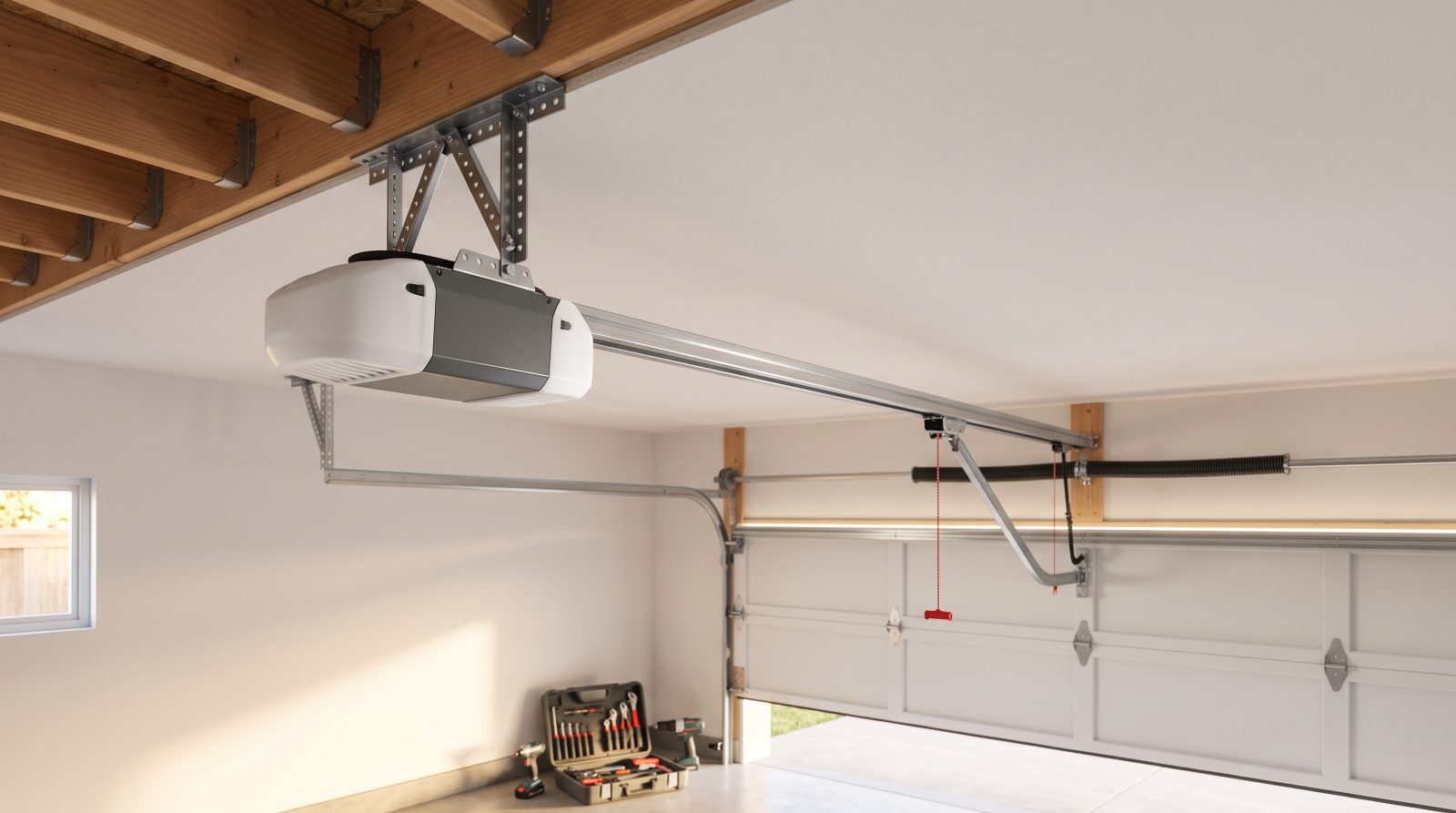
Because we're mobile, the entire installation happens in your driveway and garage, on your schedule, with no trip to a store and no waiting around for a separate delivery. A proper install is far more than bolting a motor to the ceiling, and the steps below are what separate an opener that lasts a decade from one that's noisy and failing within a year.
Before anything is mounted, the door itself gets a balance and spring check. An opener is designed to lift a counterbalanced door, not to fight a heavy one, so if the springs are worn or the door is out of balance, even the best opener will burn out early. We test the balance, check the rollers and tracks, and tell you if anything needs attention before the new motor goes in. We also confirm the existing wiring and outlet are safe and properly grounded.
From there we mount and align the rail, set the travel limits and the auto-reverse force settings, install and test the photo-eye safety sensors near the floor, and verify the battery backup. We program your remotes, the wall console, and any keypad or smart-app connection, then we run the door through a full cycle several times to confirm quiet, smooth, safe operation. Finally we clean up, haul away the old opener, and walk you through how everything works.
- Door balance and spring inspection first, because an opener should never have to fight a heavy door.
- Rail mounting and alignment, travel limits, and auto-reverse force calibration for safe stopping.
- Photo-eye safety sensor install and test, plus a verified, working battery backup.
- Remote, wall-console, keypad, and smart-app programming, with a full multi-cycle test and old-unit haul-away.
Local Realities: Heat, Older Homes, and Newer Builds Around Sacramento
Sacramento isn't one type of house, and the right opener install reflects that. Central Valley heat is the common thread, an opener's logic board and motor work harder and age faster in a garage that hits well over 100 degrees inside during a July afternoon, which is why drive choice, quality components, and proper lubrication matter more here than in milder climates.
In the older, established neighborhoods, Land Park, East Sacramento, Curtis Park, Oak Park, Tahoe Park, we often see lower ceilings, original single-piece or short-track doors, and dated wiring. Low-headroom hardware and a careful look at the electrical are usually the deciding factors there, and a quiet belt drive is frequently the better call when the garage abuts living space. We come prepared for these layouts rather than assuming a standard ceiling height.
In the newer parts of the region, Natomas, Elk Grove, Folsom, Roseville, Rancho Cordova and the suburbs along Highway 50, garages tend to be standard sectional doors with modern wiring and smart-home wiring already in place, so homeowners often lean toward belt-drive smart openers that integrate cleanly with the rest of the house. Wherever you are in the greater Sacramento area, we come to you, assess the actual door and garage in front of us, and recommend the opener that fits the home rather than a one-size-fits-all box.
- Hot garages stress opener electronics and motors, so component quality and lubrication are critical locally.
- Older neighborhoods often need low-headroom hardware, a wiring check, and quieter belt drives near living space.
- Newer Sacramento-area builds are typically smart-ready, making belt-drive smart openers a natural fit.
- Fully mobile service means we assess your real door and garage on-site, not a generic spec over the phone.