Start Here: Is It the Opener, the Door, or the Power?
Before you assume the worst, it helps to figure out which of three systems is actually failing. A garage door that won't open is either an electrical problem (no power reaching the opener), an opener problem (the motor unit itself), or a mechanical problem with the door (springs, cables, rollers, or track). Narrowing it down in the first two minutes tells you whether this is a five-second fix or a job for a pro.
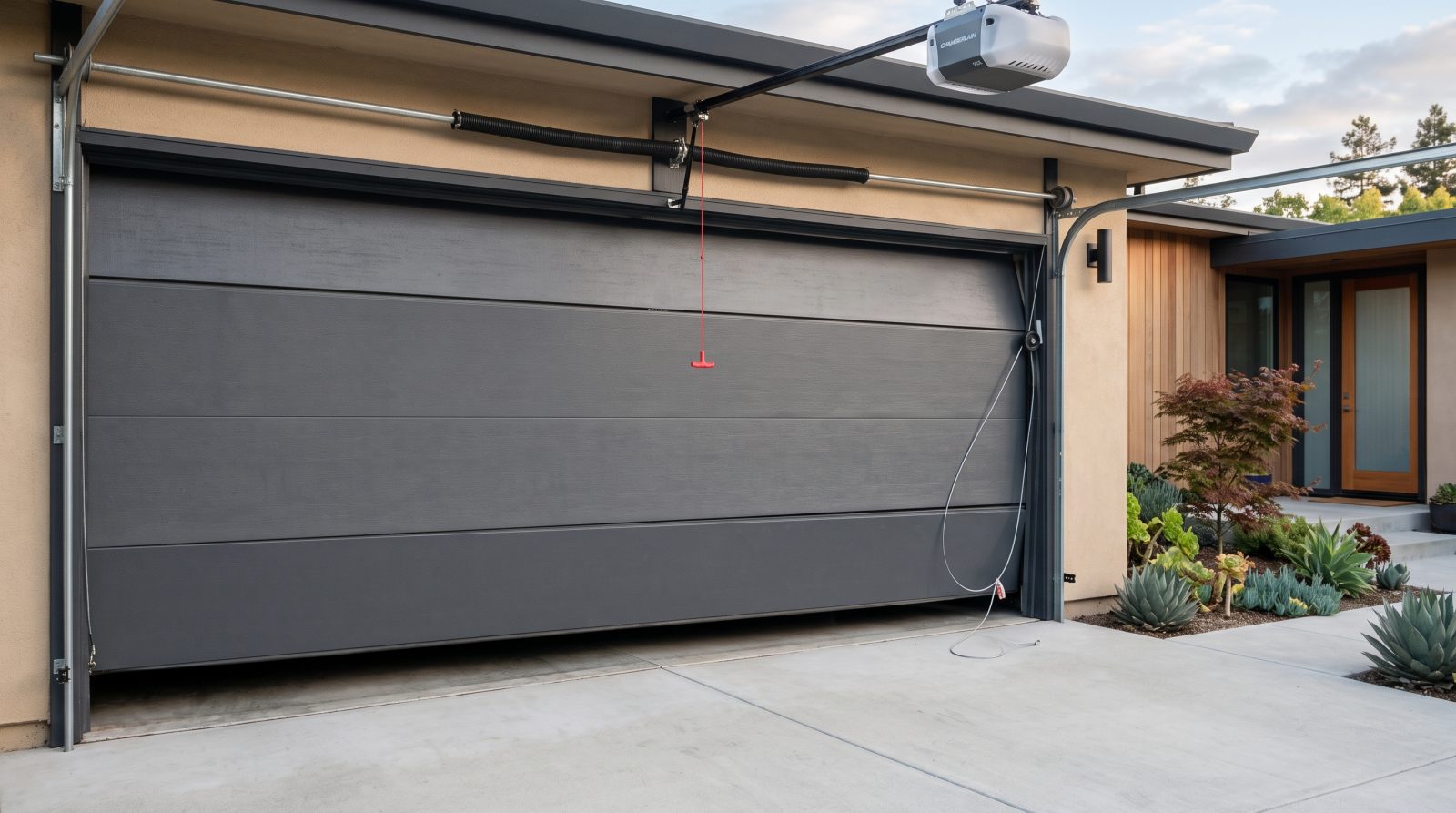
The fastest test is to pull the emergency release cord, the red handle hanging from the opener rail, while the door is fully closed, then try to lift the door by hand. If the door glides up smoothly and stays put around waist height, your mechanical hardware is fine and the issue is almost certainly electrical or in the opener. If the door is brutally heavy, slams back down, or won't budge, stop, you likely have a broken spring or cable, and lifting it further can be dangerous.
One Sacramento-specific note: many homes here, especially in older neighborhoods like Land Park, East Sacramento, and Oak Park, have detached garages on separate circuits or older wiring that trips more easily during summer when the AC load is high. A door that 'died' on a 105-degree July afternoon is sometimes just a popped breaker, not a broken opener.
- Door lifts easily by hand after pulling the release = electrical or opener issue (safer to investigate)
- Door is heavy, jerky, or won't lift after release = mechanical issue, likely a spring or cable (call a pro)
- Always test the manual release with the door fully CLOSED, never partway open
Electrical and Remote Problems You Can Safely Check Yourself
If your door passed the manual-lift test, the culprit is usually power or controls, and this is the area where a homeowner can safely do real troubleshooting. Start with the wall button: if the wall-mounted button works but the remote does not, the issue is the remote, not the opener. If neither works, you are likely looking at a power problem.
Check that the opener is plugged in (vibration and people bumping it loose is more common than you would think), then check your breaker panel for a tripped breaker on the garage circuit. In Sacramento's summer heat, circuits running near max load are quick to trip, and a detached garage may have its own subpanel. Reset any tripped breaker and try again.
Remote and keypad issues are the single most common 'won't open' call we get, and most are simple. A dead remote battery, a wireless keypad with a faded code, or interference can all stop the signal. If your remote light is dim or dead, swap the battery first. If the door reverses or refuses to move and you hear the motor click, that points toward the safety sensors, covered in the next section.
- Wall button works but remote doesn't: replace the remote battery, then re-program the remote to the opener
- Nothing responds: check the plug, then check for a tripped breaker (common in summer heat)
- Keypad stopped working: re-enter or reset your PIN; cold or faded keypads sometimes need a new battery
- Try a second remote or the wall button to confirm whether the problem is the opener or just one control
The Safety Sensors: The Sneakiest Cause of a Stuck Door
If your door opens fine but refuses to close, or closes a few inches and reverses, the photo-eye safety sensors are the prime suspect. Federal law has required these on residential openers since 1993, and they are two small units mounted near the bottom of each track, roughly six inches off the ground, connected by an invisible infrared beam. Anything that breaks or misaligns that beam tells the opener to stop for safety.
This is genuinely the easiest real fix on the list. Sacramento's dusty Central Valley air, spider webs (we get a lot of those in garages here), and a stray broom or bin leaning into the beam are constant offenders. Look at the small LED on each sensor: a steady, solid light on both means they are aligned and seeing each other. A blinking or dark LED means one is bumped out of alignment or blocked.
Wipe both lenses gently with a soft cloth, clear anything sitting in the beam path, and check that nothing has knocked a sensor sideways. If a bracket has been bumped, a careful nudge to realign until both LEDs glow steady often solves it. If the lights stay off entirely even after cleaning, the wiring or a sensor itself may have failed, which is a quick pro repair.
- Symptom: door opens but won't close, or reverses immediately after touching the floor
- Check both sensor LEDs: solid light on both = aligned; blinking/off = blocked or misaligned
- Clean dusty lenses and clear the beam path (a stored bin or broom is a frequent culprit)
- If LEDs stay dark after cleaning, the sensor or wiring may have failed, a fast professional fix
Broken Springs and Cables: Where Safe DIY Ends
If your door wouldn't lift by hand in the first test, you are almost certainly dealing with a broken torsion spring or a failed cable, and this is where we ask you to stop and step back. The springs above your door are wound under enormous tension to counterbalance a door that can weigh 150 pounds or more. A torsion spring stores hundreds of pounds of force, and a slip while it is under load can break fingers, hands, or worse. This is the number one cause of serious garage door injuries.
A few signs point clearly to a spring: a loud bang from the garage (people often think someone broke in), a visible gap or separation in the coiled spring above the door, a door that opens a few inches and stops, or a door that feels impossibly heavy. Cables that have frayed or jumped off the drum will leave the door crooked, with one side sitting higher than the other. Sacramento's temperature swings, scorching summers and cool, damp winters, fatigue spring metal over years of cycling, and most springs are simply rated for a finite number of open-close cycles.
Springs and cables are matched, calibrated components, and they should be replaced as a set by a tech with the right winding bars and training. As a mobile garage door company, we carry the common spring sizes used across Sacramento-area homes and replace them on-site the same day in most cases. Trying to force the door, prop it, or wind a spring yourself is the one part of this guide we strongly advise against.
- Warning signs: a loud bang, a visible gap in the spring, a crooked door, or a door too heavy to lift
- Do NOT attempt to wind, replace, or 'reset' a torsion spring yourself, the stored tension is dangerous
- Don't force or prop a door with a broken spring; the cables and opener can be damaged further
- Springs are replaced as a calibrated pair, and we stock common sizes for same-day mobile service
Off-Track Doors, Rollers, and What Mobile Service Means Here
Sometimes the door is simply off its track. A car that nudged the door, a worn or shattered roller, or a bent track from years of use can pull the door out of alignment so it binds and stops. You will usually see the door sitting at an angle, hear grinding, or notice it hanging up at the same spot every time. A door that is partially off its track is unstable, do not operate the opener, since that can worsen the damage or drop the door.
Rollers and hinges wear out gradually, and our dry, dusty climate plus pollen-heavy springs mean Sacramento garage hardware collects grit that accelerates wear. A door that has gotten louder and jerkier over months is often telling you the rollers, bearings, or hinges are due for service before they fail outright.
Because we are a mobile, we-come-to-you operation, you do not haul anything anywhere, we bring the parts and tools to your driveway, whether you are in Natomas, Elk Grove, Folsom, Rancho Cordova, Citrus Heights, or central Sacramento. We diagnose on-site, show you what failed, and most common repairs (springs, cables, rollers, sensors, opener fixes) are handled the same day. If your door won't open, call or request a free quote and we will tell you what we are seeing before any work begins.
- Off-track signs: door sits crooked, grinds, or hangs up at the same point, stop using the opener
- Gradually louder, jerkier operation usually means worn rollers, hinges, or bearings due for service
- We come to you across the Sacramento area with parts on the truck, no need to transport anything
- On-site diagnosis with most common repairs completed same-day