What a Professional Garage Door Tune-Up Actually Includes
A real tune-up is far more than a squirt of spray lubricant. It is a systematic inspection and adjustment of every moving and load-bearing part of the door, from the springs overhead to the rollers in the track to the opener mounted to your ceiling. The goal is to catch wear while it is still a quick adjustment instead of an emergency repair, and to restore the smooth, balanced movement the door had when it was new.
Because we work as a mobile service, the full tune-up happens in your driveway in Sacramento with no need to haul anything in. We move through the system in order, tighten what has loosened from constant vibration, and test the door under real operating conditions so you can see and hear the difference before we leave.
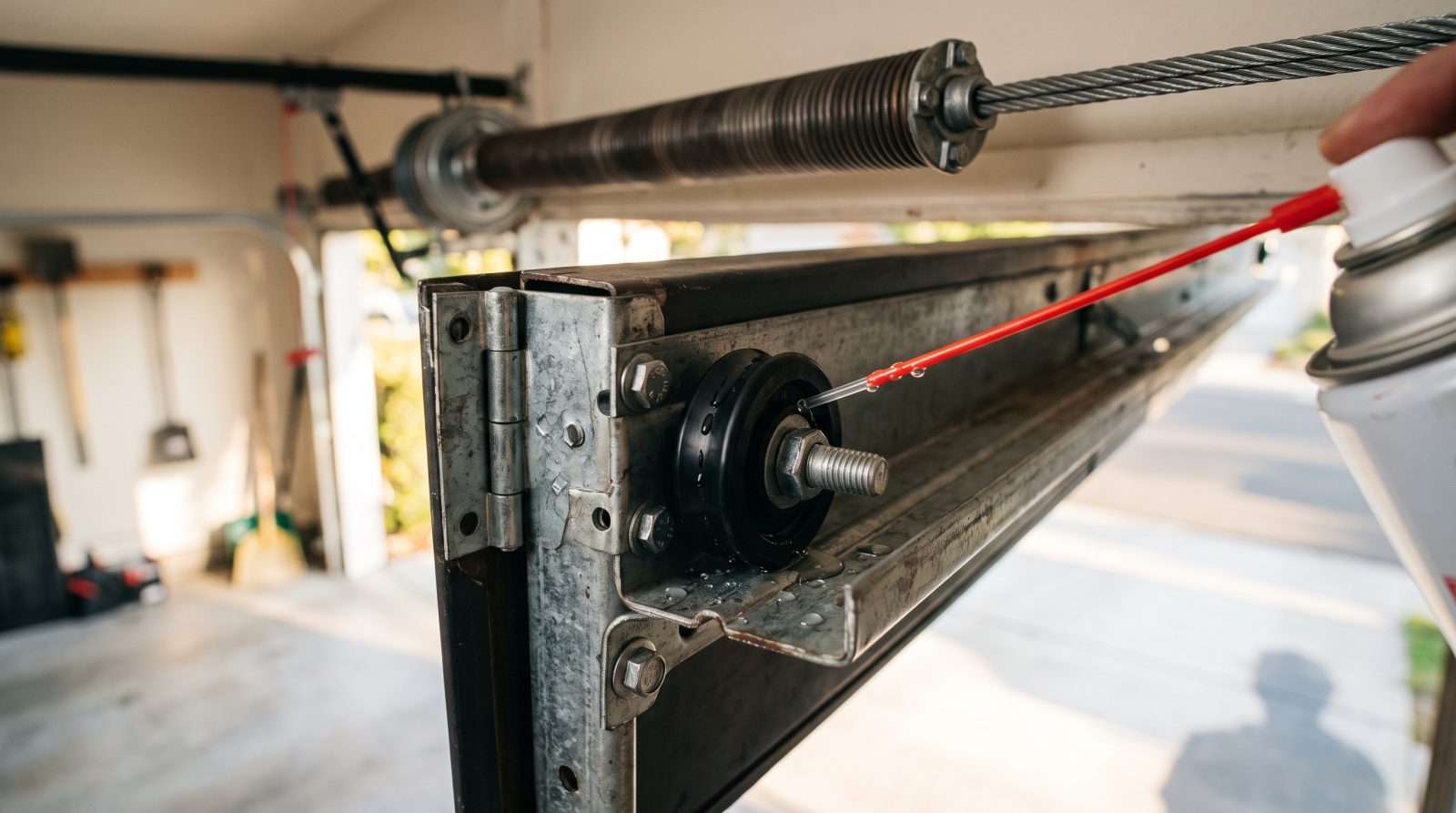
- Lubrication of springs, hinges, rollers, bearings, and the opener screw or chain with the correct garage-door-grade lubricant
- Tightening of all hinges, brackets, track bolts, and the opener rail hardware loosened by vibration
- Visual and tactile inspection of torsion or extension springs, cables, and drums for fraying, rust, or stress
- Inspection and adjustment of the rollers and track alignment so the door glides without binding
- Testing and fine-tuning of the opener's force and travel limits so it stops and reverses correctly
Why Balance and Safety Testing Matter Most
The single most important part of any tune-up is the balance test. A properly balanced door is held almost weightless by its springs, so your opener barely has to work and the door will hold its position when stopped halfway. When a door falls out of balance, the springs are slowly losing tension and the opener is forced to lift far more weight than it was designed to, which burns out motors, strips gears, and shortens the life of the whole system. We disconnect the opener, lift the door by hand, and check that it stays put at the halfway point, then adjust accordingly.
Equally critical is the safety reversal system. Federal safety standards require every opener to reverse when it meets resistance and when something crosses the photo-eye sensors near the floor. A door that does not reverse properly is a genuine hazard to children, pets, and vehicles. We test both the mechanical force reversal and the photo-eye beam, realign sensors that have drifted out of position, and confirm the door behaves exactly as it should before we consider the job done.
- Hands-on balance test with the opener disconnected to confirm the springs are carrying the door's weight
- Photo-eye sensor alignment and beam test so the door reverses when something breaks the path
- Mechanical force-reversal test to confirm the door backs off when it meets an obstruction
- Auto-reverse and travel-limit checks so the door fully closes and seals without slamming or bouncing
- A clear report on any spring or cable wear we find, with honest options rather than pressure
Why Sacramento Homes Need Tune-Ups More Often
Sacramento's weather is genuinely hard on garage doors. Summer attic and garage temperatures regularly climb past 110 degrees, which thins out old lubricant and bakes grease off of bearings and rollers. Then winter brings the cool, damp air that rolls in off the Delta and the Valley fog, encouraging surface rust on springs, hinges, and exposed cables. This repeated cycle of heat and moisture is exactly what dries out and corrodes the parts a tune-up is meant to protect.
Many Sacramento homes also use the garage as the primary entrance, so the door may cycle six, eight, or more times a day rather than the occasional weekend use it was rated for. Newer suburban builds in areas like Natomas, Elk Grove, and Rancho Cordova often have heavier insulated steel doors and a single spring, which means there is less margin for wear before the opener starts struggling. Older neighborhoods closer to Midtown and Land Park frequently have aging hardware that benefits enormously from a yearly adjustment.
The practical takeaway is simple: an annual tune-up is the right baseline for most Sacramento homes, and twice a year is smart if your garage is your main door or if you have a heavy, high-cycle setup. Catching a dry bearing or a loose cable drum in spring is a routine visit, while ignoring it through a brutal summer is how doors fail.
Signs It's Time to Schedule a Tune-Up
You rarely need a technician to tell you something feels off, but it helps to know which symptoms point to wear that a tune-up can correct before it turns into a breakdown. Most of these are the door's way of telling you that lubrication has dried out, hardware has loosened, or the spring tension is starting to drift.
If you notice any of the following, it is worth booking a visit while the fix is still small. We come to you anywhere in the Sacramento area, often with same-day availability, so you do not have to wait for a minor issue to become a stuck door.
- Grinding, squealing, or rattling noises when the door opens or closes
- The door jerks, hesitates, or moves unevenly along the track
- The opener strains, runs louder than it used to, or struggles to lift the door
- The door will not stay put when stopped halfway, signaling a balance problem
- It has been more than a year since your last service, or you have never had the door tuned
Tune-Up Cost and What Drives the Price
Routine maintenance is one of the most affordable services a homeowner can schedule, and it almost always costs a fraction of the repair it prevents. As a general industry range, a standard residential garage door tune-up typically falls somewhere around $75 to $150, with the final figure depending on the specifics of your system. We give you a clear quote before any work begins, so there are no surprises.
A few factors move the price within that range. A single-spring, single-car door takes less time than a two-car door with two torsion springs and more hardware to inspect and lubricate. If we find a worn part during the inspection, such as cracked rollers or a frayed cable, we explain the issue, show you what we found, and provide a separate honest quote rather than rolling unexpected charges into the tune-up. The maintenance visit itself stays predictable.
Because we are fully mobile, there is no shop markup and no need for you to transport anything. We arrive with the tools, lubricants, and common parts on the truck, perform the full service in your driveway, and leave you with a door that is quieter, safer, and far less likely to leave you stranded.