When a Single Panel Replacement Makes Sense (and When It Doesn't)
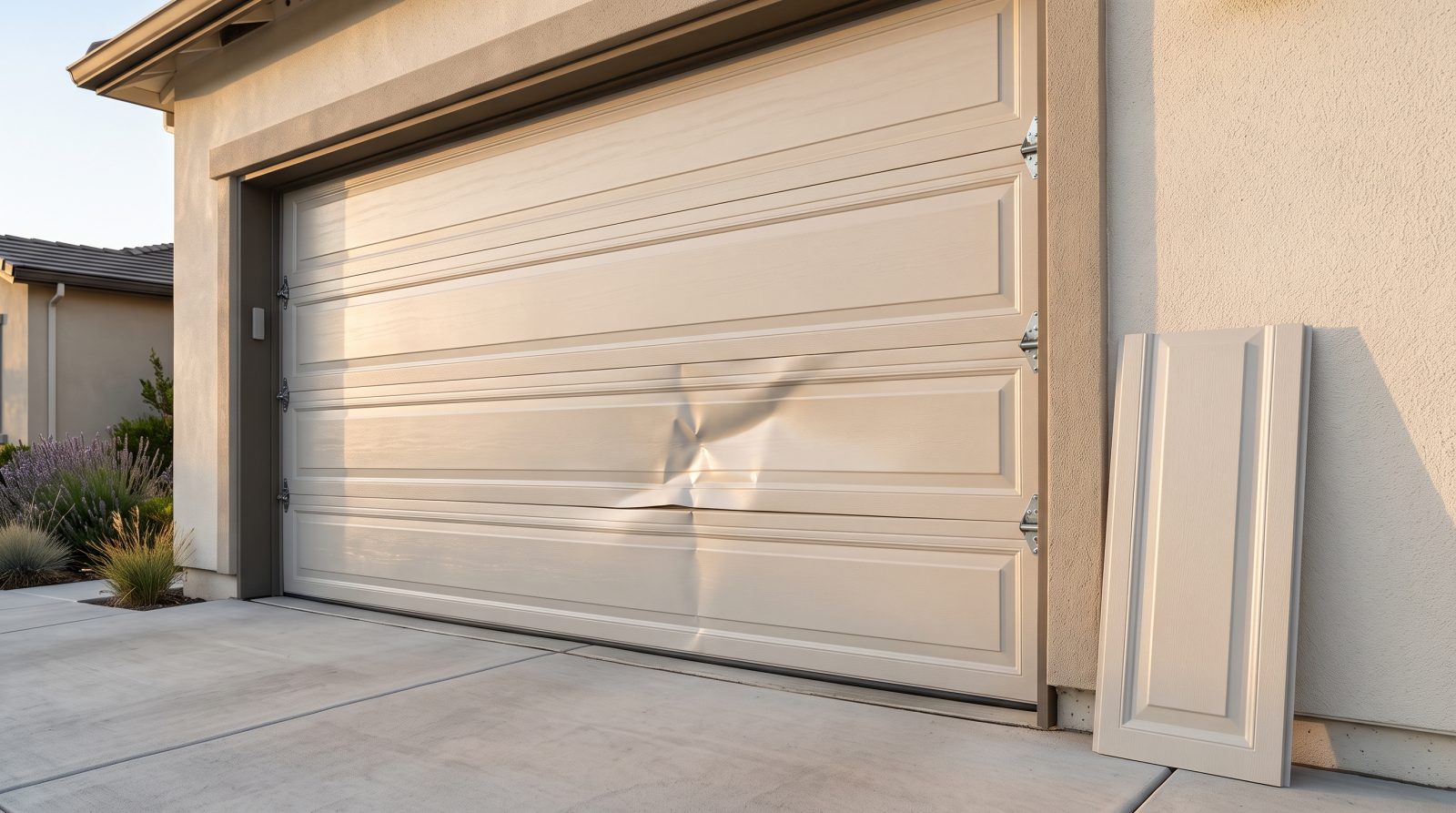
Garage doors are built in horizontal sections, and the good news is that these sections are designed to be individually replaceable. If a backing trailer, a basketball, a fender-bender in the driveway, or a stray Sacramento hailstorm has dented or cracked one section while the rest of the door is solid, replacing that single panel is usually the most cost-effective path. You keep your existing tracks, springs, opener, and the panels that are still in good shape, and you avoid the larger expense of a full door.
That said, a good technician will tell you honestly when a panel swap is the wrong call. The deciding factors are usually the age of the door, whether the original model is still manufactured, and how much damage there really is. Older doors and discontinued styles can make matching difficult, and a door with two or three compromised sections often costs more to patch than to replace outright. We walk you through that math at the curb so you can make an informed decision rather than guessing.
- Good candidates: one (or two) damaged sections on an otherwise healthy door, a model still in production, and panels with no underlying frame or track damage
- Reconsider a swap when: the door is significantly aged, the style is discontinued, multiple sections are bent, or the impact also damaged tracks, rollers, or the bottom seal
- Bottom-section dents are the most common request in Sacramento driveways and are usually very replaceable
- Top-section cracks near the opener arm may point to operational issues worth inspecting before any new panel goes on
Matching Your Panel: Color, Style, and the Honest Truth About "Perfect"
The number one question we hear is whether a replacement panel will match the rest of the door. The honest answer: matching the panel design (raised-panel, flush, carriage-house, long or short rib pattern) is usually achievable if your door style is still made. Matching color is where expectations need to be realistic. A door that has lived through years of Sacramento Valley sun has faded, and a brand-new factory panel will look slightly fresher than its neighbors until it weathers in.
We handle this two ways. When the original manufacturer and model are identifiable, we source a factory-matched section in the same profile and standard finish. When an exact factory color isn't available or the door has faded noticeably, we can discuss professionally repainting the replacement (and sometimes the full door) to a uniform color so the repair disappears. We will never promise a flawless invisible match sight-unseen. Instead, we identify your door, show you the closest realistic option, and let you decide what level of match is worth it for your home.
- We identify the manufacturer, series, and panel profile before quoting, so the match conversation is grounded in reality
- Style match (panel pattern and window layout) is typically the easiest part when the model is still produced
- Color match is approximate on sun-faded doors; a uniform repaint is the cleaner-looking option in many cases
- Insulated vs. non-insulated and steel vs. composite construction all affect what we order and how it performs
How a Mobile Panel Replacement Works at Your Sacramento Home
Because we're a mobile, we-come-to-you operation, the entire process happens in your driveway. We start with a visit to inspect the damaged section, confirm the door's make and model (often from a label inside the door or on the tracks), and measure precisely. Garage door sections are not one-size-fits-all; width, height, gauge, insulation, and hardware spacing all have to line up, so accurate identification up front prevents a wrong part and a wasted trip.
Once the correct section is sourced, installation involves safely managing the door's spring tension, releasing the affected section, removing the damaged panel along with its hinges and rollers as needed, fitting the new section, and re-securing everything so the door is balanced and tracks cleanly. Spring tension is the part homeowners should never DIY: a torsion spring stores enormous force, and that's exactly why this work belongs with a trained technician. After install, we cycle the door several times, check the balance, and make sure the opener's force and safety reversal behave correctly with the new panel in place.
- On-site inspection and exact measurement before any part is ordered
- Safe handling of spring tension and hardware during the swap
- New section fitted with proper hinges, rollers, and alignment to the existing track
- Full operational test: balance, smooth travel, opener force, and auto-reverse safety check
Local Realities: Why Sacramento Doors Take a Beating
Sacramento's climate is tough on garage doors in specific, predictable ways, and that shapes what we see on panel jobs. The long, intense summer heat and direct sun bake south- and west-facing doors, fading paint and stressing finishes faster than in milder coastal areas. That UV exposure is the main reason color matching gets tricky here: the undamaged sections have quietly faded, even if you never noticed it day to day.
On the flip side, the wet winter season and the Delta breeze carry moisture that can find its way into chips, scratches, and the bottom edge of a panel. On steel doors that can mean rust creeping out from a dent; on older wood or composite sections it can mean swelling and rot. We also see plenty of straightforward impact damage from busy driveways and tight garages across neighborhoods from Land Park and East Sacramento to Natomas, Elk Grove, Folsom, Roseville, and Citrus Heights. Knowing these local patterns means we arrive prepared for what your door is actually dealing with, not a generic checklist.
- Intense Valley summer sun fades finishes and complicates exact color matching on older sections
- Winter moisture and Delta-area humidity can turn a small dent or chip into rust or rot over time
- High-traffic driveways and tight two-car garages drive a steady stream of impact dents
- Same-day service across the greater Sacramento area, with no storefront visit required on your end
Repair, Replace the Panel, or Replace the Door? A Straight Answer
Not every dent needs a new panel. A shallow ding in a steel door can sometimes be left alone or addressed cosmetically, and we'll tell you when spending money isn't warranted. A single significantly damaged section that compromises looks, insulation, or structural integrity is the textbook case for a panel replacement. And when several sections are involved, or the door is old enough that good matches no longer exist, a full door replacement is often the better long-term value.
Our job is to give you that recommendation straight, with the trade-offs laid out, rather than upselling the biggest ticket. Panel replacement costs vary widely depending on the door's brand, whether it's insulated, the panel size, and how hard the match is to source; industry pricing for a single section can range broadly, so we give you a clear, written estimate for your specific door before any work begins. You'll know what you're paying for and why, and you can always choose to start with the panel and revisit a full replacement later.
- Minor cosmetic dents: sometimes best left alone or addressed lightly to save you money
- One damaged section on a current model: prime candidate for panel replacement
- Multiple damaged sections or a discontinued door: full replacement is usually the smarter spend
- Transparent, written estimate for your exact door, springs, and hardware before we begin