What Drives Garage Door Cost in Sacramento
Before you compare materials, it helps to understand the levers that move the final number. A garage door price is rarely just the panel. Your total is shaped by material, size (single vs. double), insulation level, window and hardware options, the strength of the spring and opener system, and the labor to safely remove the old door and install the new one. In the Sacramento area, two local realities matter more than most homeowners expect: heat and moisture.
Summer afternoons in Sacramento, Elk Grove, and Roseville regularly push past 95 to 100 degrees, and an attached or tandem garage with a south or west-facing door turns into an oven. That makes insulation a genuine performance upgrade here, not just a comfort nicety, especially if your garage doubles as a gym, workshop, or laundry room. On the flip side, winter fog and Delta-influenced damp air can be hard on bare steel and untreated wood near the bottom panel, which is why finish quality and material choice affect both price and lifespan.
Because we operate as a mobile service, our pricing reflects on-site measurement and installation rather than a fixed storefront sticker. That tends to work in your favor: we size the door to your actual opening, flag whether your existing tracks, springs, and opener can be reused, and only quote what your home needs. The ranges below are industry cost ranges for the Sacramento market, not firm quotes, and your real number depends on the specifics we confirm at your home.
- Material: the dominant cost driver, from budget steel to premium wood and glass
- Size: a double (two-car) door typically costs noticeably more than a single
- Insulation: single-layer (none), double-layer (steel-insulation-steel), or triple-layer with higher R-value
- Windows, decorative hardware, and finish/color upgrades add to the panel price
- Spring system, rollers, and opener condition affect whether parts can be reused or must be replaced
- Removal and disposal of the old door plus labor for a safe install
Cost Ranges by Material
Below are typical installed cost ranges for a standard single-car residential door in the Sacramento area, with double-car doors generally running higher. These are industry ranges for comparison, not a quote for your home. Materials are listed from most budget-friendly to most premium.
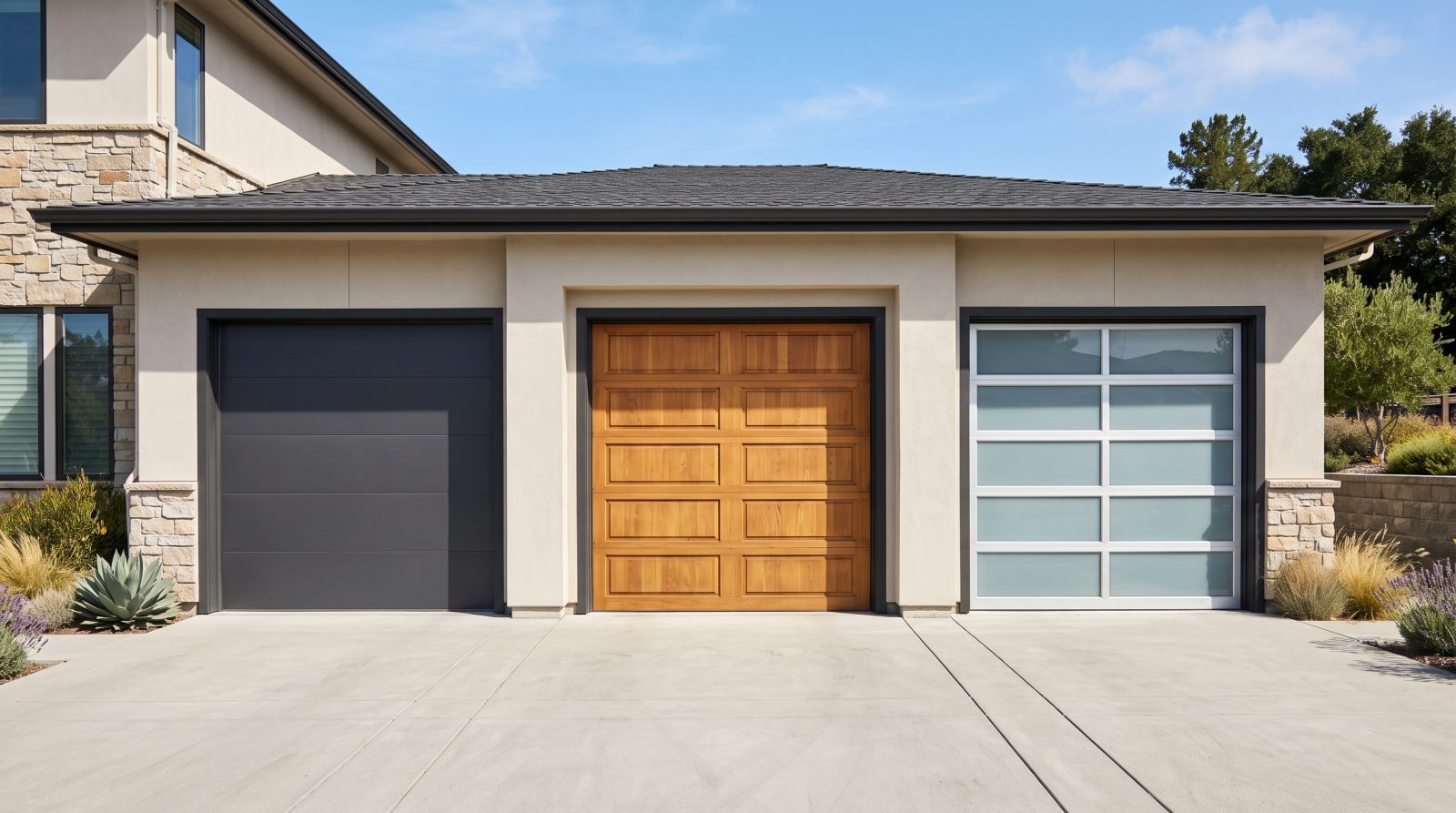
Steel is by far the most popular choice in Sacramento neighborhoods, and for good reason: it offers the best balance of price, durability, and low maintenance. A basic single-layer steel door is the entry point, while insulated double- and triple-layer steel doors cost more but pay you back in summer heat control and quieter operation. Aluminum and aluminum-with-glass doors are lightweight and rust-resistant, popular for modern Midtown and East Sacramento remodels, and sit in the mid-to-upper range depending on glass. Wood and wood-composite doors deliver the highest curb appeal for craftsman and custom homes in areas like Land Park and the Fab 40s, but they are the priciest and require the most upkeep in our sun. Fiberglass and full-view glass are specialty options at the upper end.
Insulation level can shift any of these ranges. As a rule of thumb in the Sacramento climate, stepping up from a non-insulated to an insulated steel door is one of the best value upgrades you can make, particularly for attached garages and west-facing openings that take the brunt of the afternoon sun.
- Single-layer steel (non-insulated), single-car: roughly $700 to $1,500 installed
- Insulated steel (double or triple-layer), single-car: roughly $1,200 to $2,800 installed
- Double-car steel door: commonly $1,500 to $4,000+ installed depending on insulation and windows
- Aluminum / aluminum-and-glass, single-car: roughly $1,500 to $3,500 installed
- Fiberglass, single-car: roughly $1,500 to $3,500 installed
- Wood or wood-composite, single-car: roughly $2,500 to $6,000+ installed, more for custom
- Full-view glass (aluminum frame, single-car): roughly $3,000 to $7,000+ installed
Cost by Door Type and Style
Material sets the floor, but the door type and style layer on top of it. The most common residential style in Sacramento is the sectional door, which rolls up in horizontal panels along overhead tracks. Sectional doors are what most of the material ranges above assume, and they come in raised-panel, flush, carriage-house, and modern flat designs. Carriage-house styling (the look of old swing-out barn doors on a modern sectional) carries a premium for the decorative hardware and panel detail.
Modern flat-panel and full-view glass doors have become popular on contemporary builds and remodels around Midtown, East Sac, and the newer Folsom and Roseville developments. Full-view glass maximizes light and street appeal but is the most expensive style per square foot, and tinted or frosted glass adds cost while helping with our intense afternoon glare and privacy. Specialty and custom-size openings, oversized RV or shop doors, and non-standard heights also push beyond the standard ranges because they require custom panels, longer tracks, and heavier-duty springs.
Whatever style you choose, the door has to be matched to the right spring and opener system for its weight. A heavier wood or glass door needs stronger springs and often a more powerful or belt-drive opener for smooth, quiet lifting. When we measure on-site, we confirm whether your current hardware can carry the new door or whether the spring and opener should be upgraded as part of the job, which we always call out in the quote so there are no surprises.
- Raised-panel sectional (most common, best value): aligns with the material ranges above
- Carriage-house style: adds a premium for decorative hardware and panel detail
- Modern flat-panel: cost depends heavily on material and glass content
- Full-view glass: the highest cost per square foot of any style
- Custom, oversized, or RV/shop doors: priced above standard openings
- Spring and opener upgrades may be needed to safely match a heavier door
New Door vs. Repair: Spending Smart
Not every problem calls for a full replacement, and we will tell you honestly when a repair is the better value. If your panels are straight and rust-free but the door is loud, slow, or jerky, the issue is often the springs, rollers, cables, or opener, all of which cost a fraction of a new door. A single bent or dented bottom panel can sometimes be replaced on its own if the model is still available, rather than swapping the whole door.
Replacement makes the most sense when the door is severely dented from a backed-into bumper, when a non-insulated door is baking your attached garage every summer, when multiple panels are cracked or rotting (common on aging wood doors in older Sacramento neighborhoods), or when you simply want a fresh look and better street appeal before selling. In those cases, an insulated steel door is usually the strongest return on your dollar in our market, balancing upfront cost against years of heat control and low maintenance.
Because we come to you, the most reliable way to know whether to repair or replace is a free, on-site assessment. We measure the opening, inspect the springs and tracks, check the opener, and give you clear cost ranges for both paths so you can decide with real numbers. Same-day service is available for many repairs, and there is never any pressure to buy a full door when a targeted fix will do.
- Noisy, slow, or jerky door: usually springs, rollers, cables, or opener, far cheaper than replacement
- One damaged panel: may be replaceable individually if the model is still made
- Severe denting, rot, or multiple failing panels: replacement is typically the better long-term value
- Non-insulated attached garages: an insulated steel upgrade pays off in Sacramento heat
- Free on-site assessment gives you honest repair vs. replace numbers for your home