Why Garage Doors Get Loud (and Why It Matters)
A residential garage door is one of the largest moving objects in your home, and it relies on dozens of small parts working in harmony. When any of them wear, loosen, or dry out, the smooth glide turns into noise. The sound is rarely random. Grinding, squealing, rattling, and popping each point to a different cause, which is why learning to read the noise is the fastest way to fix it.
Sacramento's climate plays a real role too. Hot, dry Central Valley summers bake the factory lubricant off hinges and rollers, leaving metal grinding on metal. Then the damp, foggy stretches of winter encourage surface rust on springs, tracks, and fasteners. Doors near the Delta or in older neighborhoods like Land Park, Curtis Park, and East Sacramento often sit through decades of this seasonal swing, so original hardware tends to dry out and corrode faster than homeowners expect.
Beyond the irritation, a noisy door is a maintenance signal worth respecting. A door that is allowed to keep running loud will wear its other components faster, because vibration loosens bolts and uneven movement strains the springs and opener. Catching the cause early is almost always cheaper and safer than waiting for something to snap.
What the Sound Is Telling You
You can diagnose a surprising amount just by listening and watching the door cycle once. Stand inside the garage, raise and lower the door, and note where the noise comes from and what it sounds like. Matching the sound to the likely culprit below will tell you whether it is a quick fix or a call for help.
- Squealing or screeching: almost always dry rollers, hinges, or bearings. The factory grease has worn off and metal is rubbing metal. This is the most common and most fixable noise.
- Grinding or scraping: worn nylon or steel rollers, bent track, or debris in the track. Grinding from the opener itself can mean a worn drive gear or chain.
- Rattling or vibrating: loose nuts, bolts, hinges, or track brackets. The door shakes itself looser over time, so this often appears gradually.
- Banging or popping: frequently a sign of a section binding, a loose hinge flexing under load, or, more seriously, a torsion spring problem. A single loud bang from the garage with the door suddenly heavy or crooked can mean a broken spring.
- Clicking or slapping: usually a chain-drive opener that needs tension adjustment, or a worn roller catching once per rotation.
- Straining or humming with little movement: the opener motor working against too much resistance, a sign the door is out of balance or a spring is failing.
Safe Fixes You Can Try Yourself
A good share of noisy doors come down to dry hardware and loose fasteners, both of which a careful homeowner can address. The key word is careful: stay away from anything under high tension. With the door fully closed and the opener unplugged for safety, work through these steps in order.
First, tighten the hardware. Vibration loosens the nuts and bolts on hinges, brackets, and the track. Run a socket wrench over every fastener you can reach and snug them down, but do not overtighten and strip them. This alone resolves a lot of rattles. Next, clean the tracks. Wipe out built-up dirt, cobwebs, and grime with a damp cloth, and check for small dents or debris that a roller might be hitting. Do not grease the inside of the track itself; rollers are meant to roll, not slide.
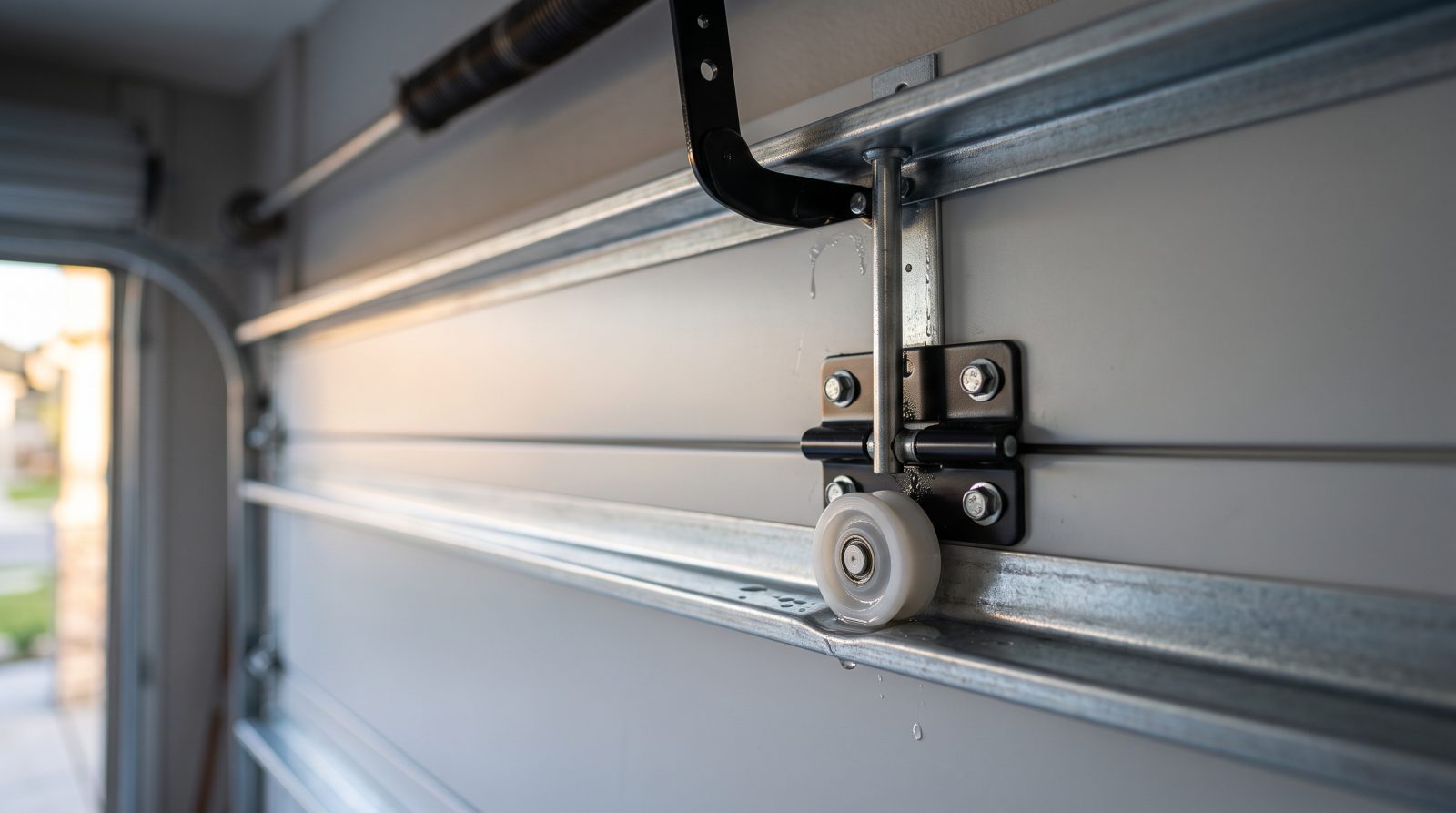
Finally, lubricate the moving parts. Use a garage-door-specific silicone or lithium-based spray, not WD-40, which is a cleaner and degreaser rather than a long-term lubricant. Lightly coat the hinges, the roller stems and bearings, the springs, and the bearing plates. Wipe off the excess and cycle the door a few times to work it in. For many Sacramento homes that have gone a couple of dry summers without service, a thorough lubrication is the single biggest improvement you will hear.
- Unplug the opener and work with the door fully closed before touching anything.
- Use silicone or white lithium garage-door lubricant, never WD-40, on hinges, rollers, springs, and bearings.
- Tighten visible nuts and bolts on hinges and brackets, snug but not stripped.
- Clean the tracks of debris; do not lubricate the track surface itself.
- Replace worn weatherstripping along the bottom and sides to cut wind rattle and Valley dust intrusion.
When to Stop and Call a Professional
Some parts of a garage door store enough energy to cause serious injury, and noise tied to those parts is not a do-it-yourself project. The torsion and extension springs counterbalance the full weight of the door, often well over a hundred pounds of tension. Adjusting, loosening, or replacing them without the right tools and training is one of the most common causes of garage-related injuries. If your noise is a sharp bang, the door has become heavy or lopsided, or you can see a gap in a coiled spring, leave it alone and call us.
Other clear signals to bring in a technician include grinding or straining from the opener motor, a door that jerks or sticks partway through its travel, repeated noise that comes right back after lubrication, and any cable that looks frayed, loose, or off its drum. These point to wear or misalignment that needs proper diagnosis, and forcing the door to keep running can turn a moderate repair into a larger one.
Because we operate as a fully mobile service, getting help is simple: we bring the tools, parts, and lubricants to your driveway anywhere around Sacramento, from Natomas and North Highlands to Elk Grove, Folsom, and Rancho Cordova. There is no storefront to visit and no need to move a malfunctioning door. A proper visit usually includes balancing the door, inspecting the springs and cables, replacing worn rollers, and tuning the opener so the whole system runs quietly again.
Keeping It Quiet: Sacramento Maintenance Rhythm
The most reliable way to avoid a loud door is light, regular maintenance timed to the local climate. Because Sacramento summers strip lubricant and winters invite rust, a twice-a-year rhythm keeps hardware happy. A simple plan is to lubricate and tighten in late spring before the heat sets in, and again in fall before the damp season, so the door is never running dry or fighting corrosion for long.
It also helps to run a quick balance test every few months. With the opener disengaged using the manual release cord, lift the door halfway by hand and let go. A well-balanced door will mostly stay put. If it slams down or flies up, the springs are out of adjustment, which both strains the opener and creates noise. That test is safe to perform, but the spring adjustment it reveals is a job for a technician.
Pay attention to changes over time, not just the noise on any single day. A door that has always been a little loud and suddenly gets dramatically louder, slower, or jerkier is telling you something has shifted. Acting on that early, with a tune-up rather than an emergency repair, is what keeps a Sacramento garage door quiet, smooth, and lasting for years. If you would rather skip the ladder and the guesswork, request a free quote and we will bring a quiet-door tune-up to your home.