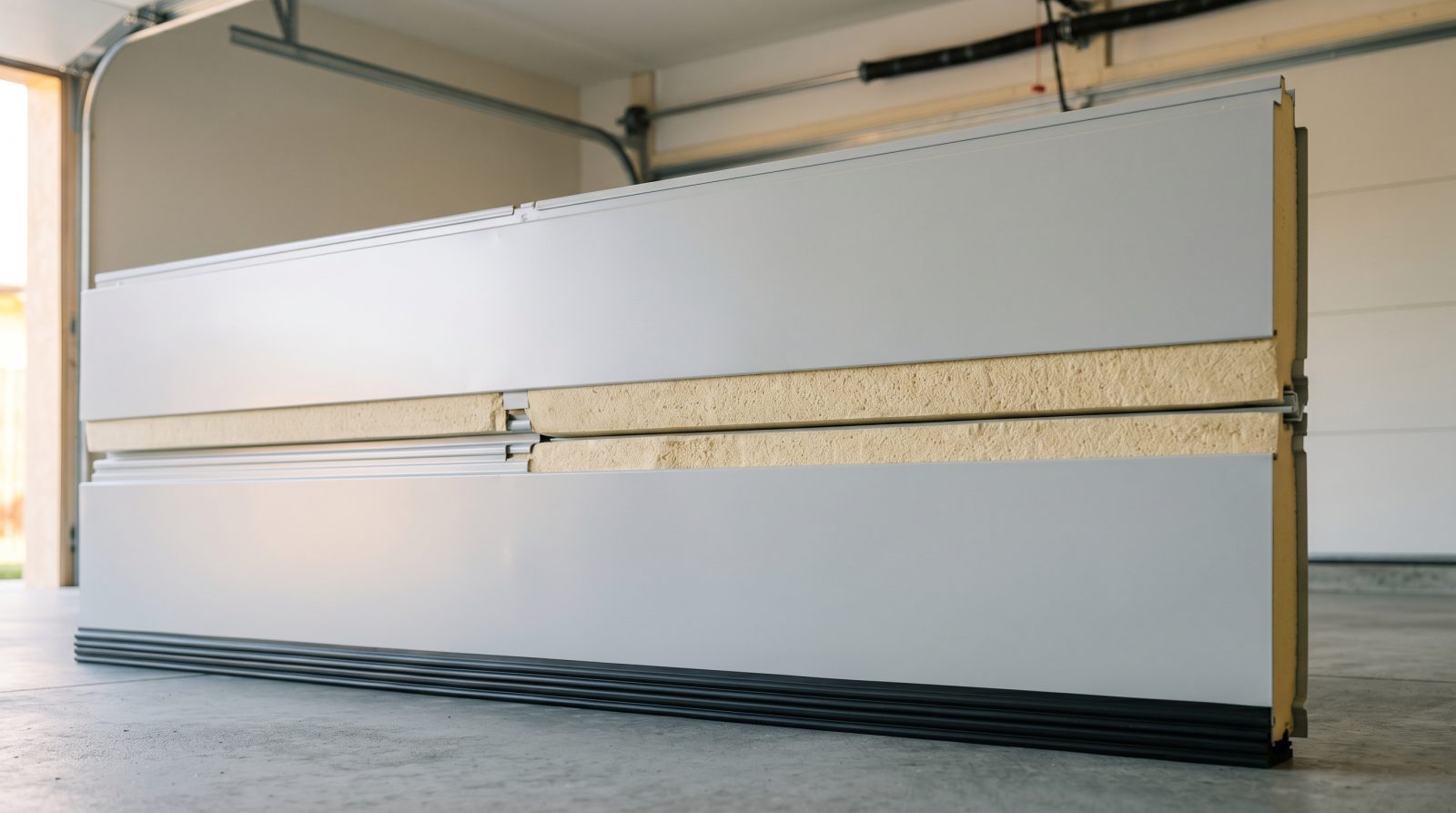
Why garage door insulation matters more in Sacramento than almost anywhere else
Sacramento sits in a hot-summer Mediterranean climate where afternoon highs routinely push past 95 to 100 degrees for weeks at a stretch, then swing 30 to 40 degrees cooler overnight when the Delta breeze rolls in. A garage door is a flat, often south- or west-facing slab that absorbs that radiant load directly. An uninsulated steel door can run far hotter than the outside air on a summer afternoon, then dump that heat into your garage for hours after sunset, turning the space into a heat battery.
That heat does not stay in the garage. In a typical Sacramento tract home or newer subdivision, there's living space sharing a wall or floor with the garage: a bedroom over the garage, a bonus room, a home office, or the laundry and kitchen on the other side of the firewall. Heat migrates through those shared assemblies, which is why the room above the garage is so often the hardest room in the house to cool. Insulating the door reduces the peak temperature the rest of the structure has to fight.
There's a comfort-and-use angle too. More people in our area are running gyms, workshops, home offices, EV charging, freezers, and second refrigerators in the garage. Appliances work harder and fail sooner in extreme heat, and nobody wants to lift weights or run a table saw in a 110-degree box. Insulation, paired with good weather sealing, is the cheapest way to make that square footage usable in summer without trying to fully air-condition an un-sealable space.
Finally, sound and durability count. An insulated door is stiffer and quieter, which matters on early-morning departures past a sleeping household or a neighbor's window a few feet away in a denser Sacramento infill lot. The rigidity also helps the door resist denting and flex over years of daily cycles.
- Largest uninsulated surface: in most homes the garage door beats any single window or wall section for bare, exposed area.
- Radiant heat load: flat steel/aluminum doors soak up direct afternoon sun and re-radiate heat long after sundown.
- Protects adjacent rooms: cuts the heat reaching bedrooms-over-garage, offices, and the kitchen/laundry firewall.
- Makes the space usable: gyms, shops, EV charging, and freezers all tolerate a buffered garage far better than a raw one.
- Quieter and stiffer: insulation deadens road and operator noise and helps the door resist denting over time.
R-value explained honestly: what the number means and where it's oversold
R-value measures resistance to conductive heat flow: the higher the number, the slower heat passes straight through the material. Garage doors are commonly marketed with an R-value somewhere in a broad range, from roughly R-6 to R-9 for a basic insulated steel door up into the high teens for premium polyurethane-injected doors. As a rule of thumb, more is better for keeping the garage closer to the temperature you want, but the number alone hides a lot.
The first catch is that there are two ways a door's R-value gets reported. 'Center-of-section' R-value tests only the insulated middle of a panel, where the foam is thickest. 'Whole-door' or installed R-value accounts for the frame, the gaps between sections, and the un-insulated edges, and it's always lower, sometimes dramatically. When you compare doors or kits, make sure you're comparing the same kind of number, because a headline figure measured at the thickest point can overstate real-world performance.
The second catch is that R-value only addresses conduction. In Sacramento, two other heat paths often matter more: air leakage and radiant gain. A door with a respectable R-value but worn or missing weatherstripping will still let hot air pour in around the perimeter, and a dark door in full afternoon sun gains heat by radiation that no amount of foam fully stops. That's why we treat insulation, air sealing, and door color/exposure as one system rather than chasing a single number.
The practical takeaway: for an attached, semi-conditioned, or frequently-used Sacramento garage, a meaningful R-value upgrade is worth it, but past a point you get diminishing returns unless the rest of the envelope is tight. Spending big on a very high R-value door while leaving torn bottom seals and gaps along the jambs is like buying a heavy coat and leaving it unzipped.
- Higher R = slower conductive heat flow, but it's only one of three heat paths.
- Center-of-section vs. whole-door R-value: always compare the same metric; installed numbers are lower.
- Air leakage and radiant gain often matter as much as the foam in our climate.
- Diminishing returns: a top-tier R-value won't pay off if the perimeter seals are shot.
- Match the number to the use: a daily workshop justifies more than a detached, rarely-used storage garage.
Methods compared: retrofit kits, replacing panels, and buying an insulated door
There are three realistic paths to a better-insulated garage door, and the right one depends on your door's age, material, condition, and how hard you push the space. The cheapest is a retrofit insulation kit applied to your existing door. The most thorough is replacing the door with a factory-insulated unit. Replacing individual panels sits in between and is usually only worthwhile when you're also repairing damage.
Retrofit kits come in a few forms. Rigid foam board (polystyrene or polyiso) cut to fit each panel and held with clips or adhesive gives the best bang-for-buck R-value and a clean finished look. Reflective foil-faced bubble or foam kits are lighter and add a radiant barrier, which is genuinely useful against Sacramento's direct sun, though their conductive R-value is modest. Batt-style fiberglass kits exist but tend to sag, absorb moisture, and look messy, so we rarely recommend them for a door that cycles daily. Any kit adds weight, which is the catch we cover in the next section.
Buying a new factory-insulated door is the cleanest long-term answer, especially if your current door is dented, single-layer aluminum, noisy, or near the end of its life. Insulated doors are built as a sealed sandwich (steel-foam-steel) or polyurethane-injected, so the insulation is bonded, weight-balanced from the factory, and won't sag or trap moisture. You also get fresh weatherstripping, tighter sections, and an opportunity to choose a lighter color or add windows thoughtfully.
Whichever route you choose, the work has to respect how a garage door is engineered. Adding foam to a door changes its weight, which changes how the springs must be balanced; pulling panels or swapping a door means handling springs and cables that store a lot of energy. That's the part homeowners most often underestimate, and it's exactly where a mobile pro coming to your driveway earns the visit.
- Rigid foam board kit: best added R-value per dollar, clean look, the most popular retrofit.
- Reflective/radiant-barrier kit: lighter and strong against direct sun, but lower conductive R-value.
- Fiberglass batt kit: cheap but sags, holds moisture, and looks rough on daily-use doors; usually avoid.
- New insulated door: best long-term result for old, single-layer, dented, or noisy doors.
- Spring balance is non-negotiable: any added weight or door swap must be re-balanced and the spring system handled safely.
The catch nobody mentions: weight, spring balance, and safety
Garage door springs are sized to counterbalance the exact weight of your door so the opener (or your arm) only has to overcome a little friction. When you add an insulation kit, you add pounds, sometimes 15 to 40 depending on the door and material. If the springs aren't adjusted to match, the door becomes 'heavy': it slams down faster than it should, struggles to stay open partway, strains the opener, and wears the springs and cables prematurely. A door that no longer balances is also a safety issue, because a heavy door is more dangerous if a cable or spring fails.
This is the single most common mistake we see with DIY insulation in Sacramento. The foam goes on over a weekend, the door looks great, and three weeks later the opener is grinding or the door won't hold position. The fix is a spring adjustment or, on older springs already near the end of their cycle life, a spring replacement to suit the new weight. Torsion and extension springs store serious energy and are the part of a garage door most responsible for injuries, which is why we handle them rather than leaving that to the homeowner.
There's also the opener to think about. An older opener that was already laboring with a bare door may not have the muscle for an insulated one, and a chain-drive on a shared wall gets louder as it strains. Part of doing insulation correctly is checking the opener's force settings and confirming the safety reversal still works after the weight changes, so the door reverses properly if something is in its path.
None of this should scare you off insulating; it just means the job is more than gluing foam to a panel. When we come out, we weigh the change, re-balance the springs, confirm the opener handles the new load, and test the auto-reverse so you end up with a door that's both cooler and safe to use every day.
- Added insulation can add 15 to 40+ lbs; springs must be re-balanced to that new weight.
- An unbalanced door slams, won't hold position, and overworks the opener, springs, and cables.
- Springs store dangerous energy and cause most garage door injuries; leave adjustment/replacement to a pro.
- Older or weak openers may need force-setting adjustments or may not handle the heavier door.
- Always retest the safety auto-reverse after any weight change.
Don't skip the seals: weather sealing is half the comfort win
Insulating the panels without sealing the gaps is the most common way Sacramento homeowners get disappointed. A garage door has four leak zones: the bottom (the long rubber astragal that meets the floor), the two vertical jambs, the top header, and the joints between sections. On older or settled doors, any of these can have daylight showing through, and that's where hot Valley air, dust, and even rodents and weeds find their way in.
The bottom seal takes the worst beating. Sun, abrasion, and our long dry season harden and crack the rubber, and uneven slab settling (common in older Sacramento neighborhoods and on expansive clay soils) leaves gaps at the corners even when the seal looks intact in the middle. A fresh, correctly-sized bottom seal plus a threshold strip on the floor where needed can close a surprising amount of the total air leakage by itself.
Perimeter weatherstripping along the jambs and header is the next priority. A flexible vinyl or rubber stop strip presses against the door face and blocks the thin but continuous gap around the edges. Combined with the bottom seal, this perimeter work is often where homeowners feel the biggest day-one difference, because you're cutting the air leakage and radiant slot that foam panels never touch.
Sealing is also the lower-risk part of the project, and it pairs naturally with insulation on the same visit. When we're out adding or upgrading insulation, we inspect all four leak zones, replace what's degraded, and make sure the door still seats and seals evenly across our region's settled slabs, so you get the full benefit of the foam you paid for.
- Four leak zones: bottom astragal, both jambs, the top header, and the section joints.
- The bottom seal degrades fastest in our sun and dry season; corner gaps are common on settled slabs.
- A new bottom seal plus a floor threshold strip closes much of the total air leak.
- Perimeter vinyl/rubber stops along jambs and header block the continuous edge gap.
- Sealing is low-risk and pairs perfectly with an insulation visit for the full comfort gain.
Insulate the existing door or buy new? A Sacramento decision guide
The honest answer depends on what you have. If your door is a sound, multi-section steel door that's only single-layer (no insulation) but otherwise straight, quiet, and tracking well, a rigid-foam retrofit plus fresh seals and a spring re-balance is usually the smart, cost-effective move. You keep the door you have, gain real comfort, and spend a fraction of a replacement.
Lean toward a new insulated door when the existing one is fighting you in other ways: visible dents and bows, a flimsy single-layer aluminum panel that bakes and rattles, sagging or rusted sections, chronic noise, or springs and rollers already near end of life. In those cases, paying to insulate a door you'll soon replace anyway is throwing money at a short-term fix. A factory-insulated door solves insulation, sealing, stiffness, and appearance in one step, with the insulation properly balanced from the start.
Climate-specific choices help either way. In full afternoon sun, a lighter exterior color reflects more heat than a dark one, and a radiant-barrier layer earns its keep here more than in a milder coastal town. If you've added a window section for light, remember glass is a weak point for heat; insulated glass or limiting glazing on the sun-facing side keeps the comfort gains you fought for.
Because we're mobile, the easiest first step is to have us come measure and assess in your driveway, anywhere in the Sacramento area. We can tell you on the spot whether your door is a good candidate to insulate or whether a new insulated door pays off faster, weigh the spring implications, and give you clear, range-based pricing so there are no surprises. There's no number to dial through this page; just request a free quote and we'll come to you.
- Retrofit makes sense: straight, quiet, well-tracking single-layer steel door worth keeping.
- Replace instead: dented, flimsy aluminum, sagging/rusted, chronically noisy, or worn-spring doors.
- Color and radiant barrier matter under our direct afternoon sun; lighter and reflective run cooler.
- Mind the glass: window sections are heat weak points; favor insulated glass or less glazing on the sunny side.
- Fastest path: we come measure in your driveway and give clear range pricing; request a free quote, no phone number needed.