What a Sectional Garage Door Actually Is
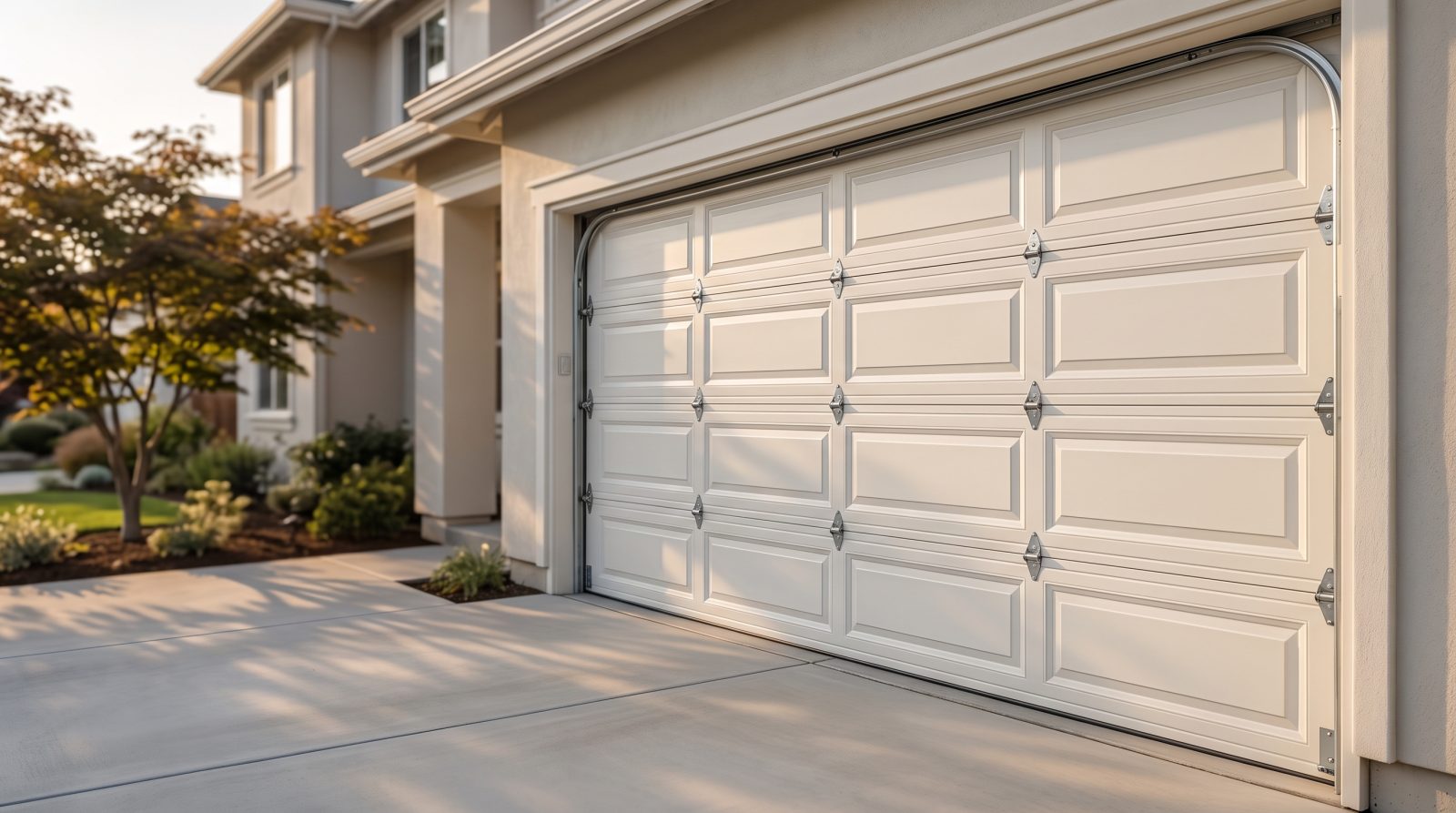
A sectional garage door is made from a stack of horizontal panels — usually four or five — hinged together so the door can flex. Instead of swinging out as one rigid slab (the way an old tilt-up or one-piece door does), each panel pivots at the hinge as the door travels. That single design choice is why sectional doors have taken over the Sacramento market: they need no swing-out clearance in the driveway, which matters on the tighter lots common in older neighborhoods like East Sacramento and Curtis Park, and they tuck flat against the garage ceiling when open.
The panels themselves come in steel (the most common around here), aluminum with glass inserts for a modern look, composite, and wood or wood-look styles popular on custom homes in places like Granite Bay. Many Sacramento-area doors are insulated with a polyurethane or polystyrene core, which is worth its weight in a region where a closed garage can become an oven in July. Insulation also stiffens the panel so it resists bowing and dampens the rattling noise that echoes through an attached garage.
- Four to five hinged horizontal panels that flex as the door moves
- Travels straight up, then curves back to rest flat under the ceiling — no driveway swing-out needed
- Common materials: insulated steel, aluminum-and-glass, composite, and wood-look
- Insulated cores help tame Sacramento's summer heat and cut garage noise
How the Panels, Rollers and Tracks Move Together
The magic of a sectional door is in how a stiff, heavy door follows a curved path. Each panel carries rollers on its edges that ride inside steel tracks mounted on both sides of the opening. Those tracks run vertically up the wall, then bend in a smooth radius and run horizontally back along the ceiling. As the door opens, the bottom panel's rollers reach the curve first, the panel rotates at its hinges, and one by one each section follows the bend until the whole door is lying flat overhead.
Hinges connect the panels and let them pivot exactly where the track curves. The rollers — usually nylon or steel — reduce friction so the door glides instead of dragging. When a sectional door starts binding, grinding, or jumping in the track, the culprit is almost always one of these moving parts: a worn roller, a bent track, a cracked hinge, or simply dry metal that hasn't been lubricated. In our experience across Sacramento homes, dust and the fine grit that blows in during dry summers accelerate roller wear, so doors here often need attention a little sooner than the manufacturer's generic schedule suggests.
- Rollers on each panel ride inside L-shaped tracks (vertical, then horizontal)
- Hinges let each section pivot precisely at the track's curve
- Nylon rollers run quieter; steel rollers last longer but can be noisier
- Binding, grinding, or a door that jumps the track points to rollers, hinges, or alignment
The Springs: The Hardest-Working Part of Your Door
A sectional garage door panel assembly can weigh well over a hundred pounds, yet a healthy door rises with one hand or a small opener motor. That is the springs doing the heavy lifting. Most Sacramento sectional doors use a torsion spring mounted on a shaft above the opening; as the door closes, the spring winds up and stores energy, then releases it to counterbalance the weight on the way up. Some lighter or older doors use extension springs that stretch along the horizontal tracks instead.
Springs are also the single most common failure point — and the one we most want homeowners to respect. They are under enormous tension, and a broken or improperly adjusted spring can cause serious injury. Telltale signs of a tired or failed spring include a door that suddenly feels extremely heavy, won't stay open, slams down fast, or shows a visible gap in the coil. Spring lifespan is rated in cycles (one open + close), so a household that runs the door many times a day will burn through that rating faster. If you suspect a spring problem, stop using the door and call for a quote — this is genuinely not a DIY job, and our mobile techs carry the tools to do it safely on-site.
- Torsion springs (above the opening) are the most common counterbalance; extension springs run along the tracks
- Springs store and release the energy that makes a heavy door easy to lift
- Warning signs: door feels suddenly heavy, won't stay up, slams shut, or you see a gap in the coil
- Spring repair is high-tension and dangerous — leave it to a trained tech rather than attempting it yourself
Common Sectional Door Problems We See Across Sacramento
Because sectional doors have so many moving parts, the failures tend to be predictable — which is good news, because they are also very fixable. The most frequent calls we get are for broken springs, worn or popped-out rollers, doors that reverse or won't close (usually a safety-sensor alignment issue near the floor), bent bottom panels from a backed-into bumper, and openers that hum but don't move. Sacramento's climate adds its own flavor: long stretches of dry heat dry out lubricant and harden weatherstripping, while the cooler, damp delta mornings can swell wood-look panels and make metal parts contract, so doors sometimes balk in winter that ran fine all summer.
Garages near the rivers or in older neighborhoods can also see hinge and track corrosion from humidity, and homes on busy or dusty corridors collect grit in the tracks that grinds at rollers. The practical takeaway: a door that has started making new noises, moving unevenly, or hesitating is telling you something. Catching a frayed cable or a single bad roller early is a small, affordable fix; ignoring it until the door drops or jams off its track is a much bigger one.
- Broken torsion springs — the number-one emergency call
- Worn rollers or a door that has jumped the track
- Door reverses or won't close — often a misaligned floor-level safety sensor
- Bent bottom panel after a bump, plus heat-dried weatherstripping and lubricant
Mobile Repair and Smart Maintenance in the Sacramento Area
We are a mobile garage door service, which means we come to your driveway with the parts and tools to diagnose and repair sectional doors on the spot — nothing to haul anywhere, and no waiting on a drop-off. Same-day service is available across the Sacramento region, from Natomas and Midtown out to Folsom, Rancho Cordova, Citrus Heights and the surrounding suburbs. When we arrive, we balance-test the door, inspect springs, rollers, hinges, cables and tracks, check the opener and safety reverse, and walk you through what we find before any work begins. Repair costs vary by the part and door, so we give a clear quote up front; the figures you see online are industry ranges, not promises, and your real number depends on what your door actually needs.
Between visits, a little maintenance goes a long way in our climate. Wipe the tracks clean of grit, apply a garage-door-rated lubricant to rollers, hinges and the spring a couple of times a year, and check the rubber bottom seal for the cracks our summer sun causes. Once a year, pull the opener's release and lift the door by hand: if it doesn't glide smoothly or won't hold its position halfway, the springs are out of balance and it's time to call. That single test catches most serious problems early — and it's the habit we wish every Sacramento homeowner had.
- We come to you anywhere in the greater Sacramento area — diagnosis and repair done in your driveway
- Same-day service available; a clear, up-front quote before any work starts
- DIY upkeep: clean tracks, lubricate rollers/hinges/springs twice a year, inspect the bottom seal
- Yearly balance test (lift the door by hand) flags spring trouble before it strands your car