How Rollers and Tracks Actually Work Together
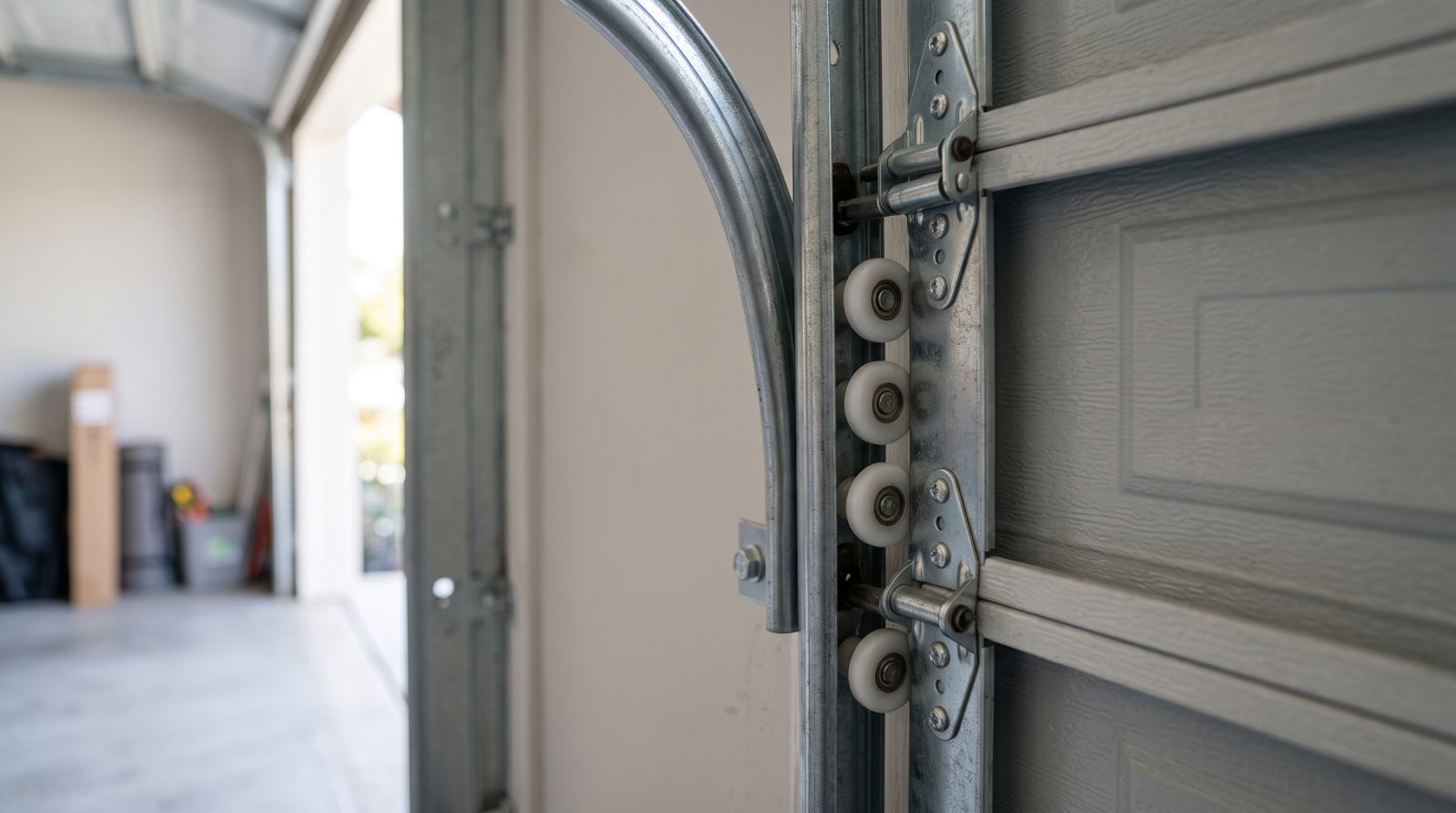
Your garage door does not lift straight up like an elevator. It bends along a curved path: vertical tracks bolted to the wall on each side, a curved section, and horizontal tracks that run back along the ceiling. The rollers are small wheels, one set on each panel, that ride inside those tracks and let the heavy door glide smoothly along that path while the springs do the heavy lifting. When everything is in good shape, the door moves quietly and evenly, and the opener barely has to work.
The system is only as good as its weakest part. If the rollers are worn, dry, or chipped, they drag instead of roll. If a track is bent, dented, or knocked out of alignment, the rollers fight against it at that spot. Either problem forces the door to move unevenly, which then strains the opener, the cables, and the springs. That is why a complaint that starts as 'it is just a little noisy' so often turns into a door that sticks, hesitates, or stops part way. Understanding that the rollers and tracks are one connected system is the key to a repair that actually lasts instead of a quick patch that fails again in a month.
Signs Your Rollers or Tracks Need Attention
Most homeowners notice the symptoms long before they know the cause. The good news is that roller and track trouble tends to announce itself clearly if you know what to listen and watch for. Catching it early usually means a smaller, simpler repair.
- Loud grinding, squealing, or rattling that gets worse over time, especially with old steel rollers that have lost their lubrication or worn down their bearings
- The door shudders, jerks, or moves in a stop-and-go motion instead of gliding smoothly
- Visible gaps between a roller and the track, or a roller that has partially come out of the track
- Tracks that look bent, crimped, or dented, often from a bumper tap, a ladder, or years of small impacts
- Rust, debris, or hardened old grease packed inside the track that the rollers have to push through
- The door looks crooked or sits unevenly when partway open, a classic sign of misalignment
- A door that has jumped the track entirely and is now stuck, leaning, or jammed at an angle
Why Rollers and Tracks Fail in the Sacramento Area
Garage door hardware wears out everywhere, but a few local realities speed it up around Sacramento. Our long, hot, dry summers bake the original lubricant off rollers and out of bearings, so metal rides on metal and parts wear faster. The Central Valley also carries a lot of fine dust and grit, especially in newer suburbs on the edges of town and in homes near open fields or construction, and that grit settles into the tracks and grinds away at the rollers like sandpaper.
Then there are the everyday impacts. Tight garages in older Sacramento neighborhoods like Land Park, Tahoe Park, and East Sacramento leave little room for error, and a single bumper tap or a misjudged backing-out can tweak a vertical track just enough to cause binding. Many homes here still run the original builder-grade plastic or basic steel rollers that came with the door a decade or two ago, and those simply have a shelf life. We frequently find a mix of all of these at once: dried-out, worn rollers fighting a track that picked up a small bend years ago. Because we are mobile and come to you, we can see your specific door in its actual garage and address the real cause rather than guessing.
What Our Mobile Roller and Track Repair Includes
When we arrive, the first step is always a full inspection of the door in motion, because a roller or track problem often reveals itself only when the door travels through its full path. We watch where it binds, listen for where the noise comes from, and check how the rollers sit in the track from bottom to top. Because the whole assembly works as a system, we also check the related hardware while we are there so we are not treating a symptom and leaving the cause.
From there, the work depends on what we find. Worn or noisy rollers are typically replaced, and many homeowners choose an upgrade to quieter, longer-lasting nylon rollers with sealed bearings that ride much more smoothly and quietly than old steel or plastic ones. Bent or dented tracks are realigned where possible, and sections that are too damaged to run true are replaced. We clean out old hardened grease and debris, confirm the tracks are plumb and properly spaced, secure loose mounting brackets, and apply the right lubricant to the moving parts. Before we call it done, we run the door through several full cycles to confirm it moves quietly, evenly, and tracks correctly end to end.
- Full diagnostic of the door in motion to pinpoint the real source of noise or binding
- Replacement of worn, chipped, or seized rollers, with optional upgrade to quieter nylon rollers
- Realignment of bent or misaligned tracks, or replacement of sections that cannot be trued
- Cleaning of debris and hardened grease from the tracks
- Tightening of loose track brackets, hinges, and hardware
- Proper lubrication and a multi-cycle test to confirm smooth, quiet operation
Why a Mobile, Come-to-You Service Makes Sense
A garage door is one of the heaviest moving objects in your home, and a door with roller or track trouble is exactly the kind you should not be forcing by hand. Trying to muscle a binding door, or worse, a door that has jumped the track, risks both injury and further damage to the panels, cables, and springs. Because we operate as a mobile service across the greater Sacramento area, the repair happens right in your garage. There is nothing to remove, transport, or reinstall, and you do not have to live with a stuck or unsafe door while you sort out logistics.
Coming to you also means we diagnose the door in its real environment. Track alignment, header clearance, and how the door sits in the opening all matter, and those are things you can only judge accurately on site. We serve homeowners throughout Sacramento and surrounding communities and aim for same-day service whenever possible, so a noisy or jammed door does not have to become a multi-day headache. When the job is finished, you get a door that opens the way it should: smooth, quiet, and tracking true.
What Roller and Track Repair Typically Costs
Honest pricing starts with honesty about ranges. Every door is different, and the right number depends on how many rollers need replacing, whether you upgrade to quieter nylon rollers, how much track needs realignment versus replacement, and the overall condition of the surrounding hardware. As a general guide, roller and track repairs are among the more affordable garage door fixes, since the parts themselves are relatively inexpensive and the labor is straightforward when caught early. A simple roller replacement sits at the lower end of the range, while full track replacement or repairing a door that has come off the track lands higher because of the added labor and parts involved.
These are industry ranges, not a quote for your specific door, because giving you a real number means seeing the actual problem. The most cost-effective move is to address noise and binding while they are still minor, before a worn roller damages a track or a misaligned track strains the opener and springs into a much larger repair. When we come out, we explain exactly what we find and what each option costs before any work begins, so you can decide with full information and no surprises. Reach out anytime to call or request a free quote.